October 16, 2026
Birthday Party Arrival Activities for Ages 4-7
Keep early birthday guests busy with low-prep arrival activities and waiting games. Get the simple drop-in plan for ages 4 to 7 now.
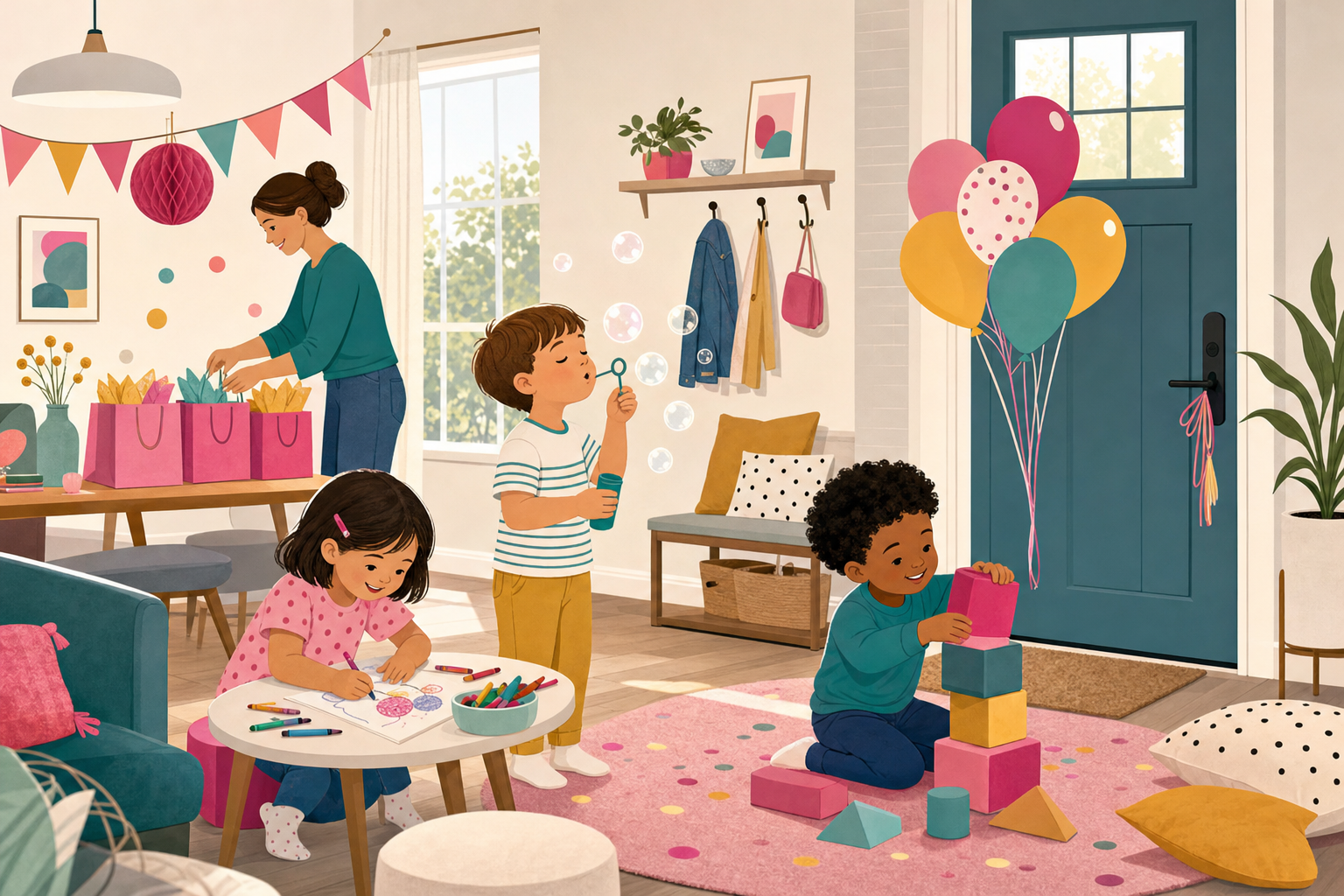
What to Do While Waiting for Birthday Party Guests to Arrive: A Low-Prep Arrival Plan for Ages 4-7
The cupcakes are out, the balloons are taped up, and your kid is already asking "is anyone here yet?" for the fifth time. Birthday party arrivals are messy by nature: guests trickle in over 20 to 30 minutes, some kids show up right on time while others wander in late, and you're stuck trying to greet parents, manage your own child's excitement, and keep a growing cluster of bored 4 to 7 year olds from turning the living room into chaos. Most party planning advice skips right over this part, tossing in a vague line like "15 minutes of free play" and moving on to the games. That's not a plan, that's a hope.
Here's an actual arrival plan built for the way kids show up in real life: in waves, at different energy levels, with parents who want to chat for just one more minute while their kid is already pulling at their hand to go play.
Why the Arrival Window Is the Hardest Part
This stretch of the party has no structure yet, and kids ages 4 to 7 do not do well with unstructured waiting. The first guest arrives and has nobody to play with. Guest four and five show up together and already have a game going. Guest seven is clingy and won't leave their parent's side. Meanwhile, your birthday kid is either overstimulated and running laps or anxious that nobody's coming.
The fix isn't one big activity. It's a drop-in station system: simple, self-explanatory setups that work whether one kid is there or six, and that don't require you to referee.
Set Up Drop-In Stations, Not Group Games
Group games need everyone present to start. Drop-in stations work with any number of kids and let them join or leave on their own. Set up two or three of these before the first guest arrives:
- A build table: a pile of LEGO, magnetic tiles, or blocks dumped in the middle of a table. No instructions needed, kids just start building.
- A coloring corner: a stack of coloring pages and a cup of crayons. Themed coloring sheets from Chunky Crayon are an easy way to match the station to your party theme without any extra design work, and they give early arrivers something calm to do while they wait for friends to show up.
- A simple sensory bin or sticker station: a bin of dry rice with scoops, or a basket of stickers and blank paper. Great for the quieter kid who arrives first and isn't ready to dive into a big group.
- An outdoor option: sidewalk chalk, a bubble machine, or a bucket of balls on the driveway if weather allows. Outdoor stations are louder and more forgiving of movement, which helps if you've got a mix of calm and wild energy showing up at once.
Put these stations in different corners of the space so kids spread out naturally instead of clumping around one toy. If you're short on setup time, this pairs well with ideas from keeping a 3 to 7 year old busy during party setup, since the same no-mess, low-interruption logic applies to the arrival window too.
A Realistic Timeline for Ages 4-7
Here's how to think about the arrival window in chunks instead of one big blur:
0 to 10 minutes (first guests trickle in):
Greet each family at the door, point the kid toward a station, and keep moving. Don't try to introduce kids to each other formally, just physically guide them toward the build table or coloring corner. At this stage, one or two kids per station is normal and fine.
10 to 20 minutes (the middle wave):
This is when most guests arrive and stations start filling up. Walk the room every few minutes, not to manage play, but to redirect kids who've stalled out. A simple "hey, want to go see what's happening at the chalk station?" works better than trying to merge groups.
20 to 30 minutes (stragglers and transition):
By now most of the group is there. This is your cue to start wrapping up free play and transitioning to the main event, whether that's a group game, the cake, or an organized activity. Give a two-minute warning (