October 1, 2026
Kids Birthday Party Food Allergy Checklist for Parents
Plan a safe, allergy-friendly birthday party with invitation wording, menu tips, and a cross-contamination checklist. Get the free guide now.
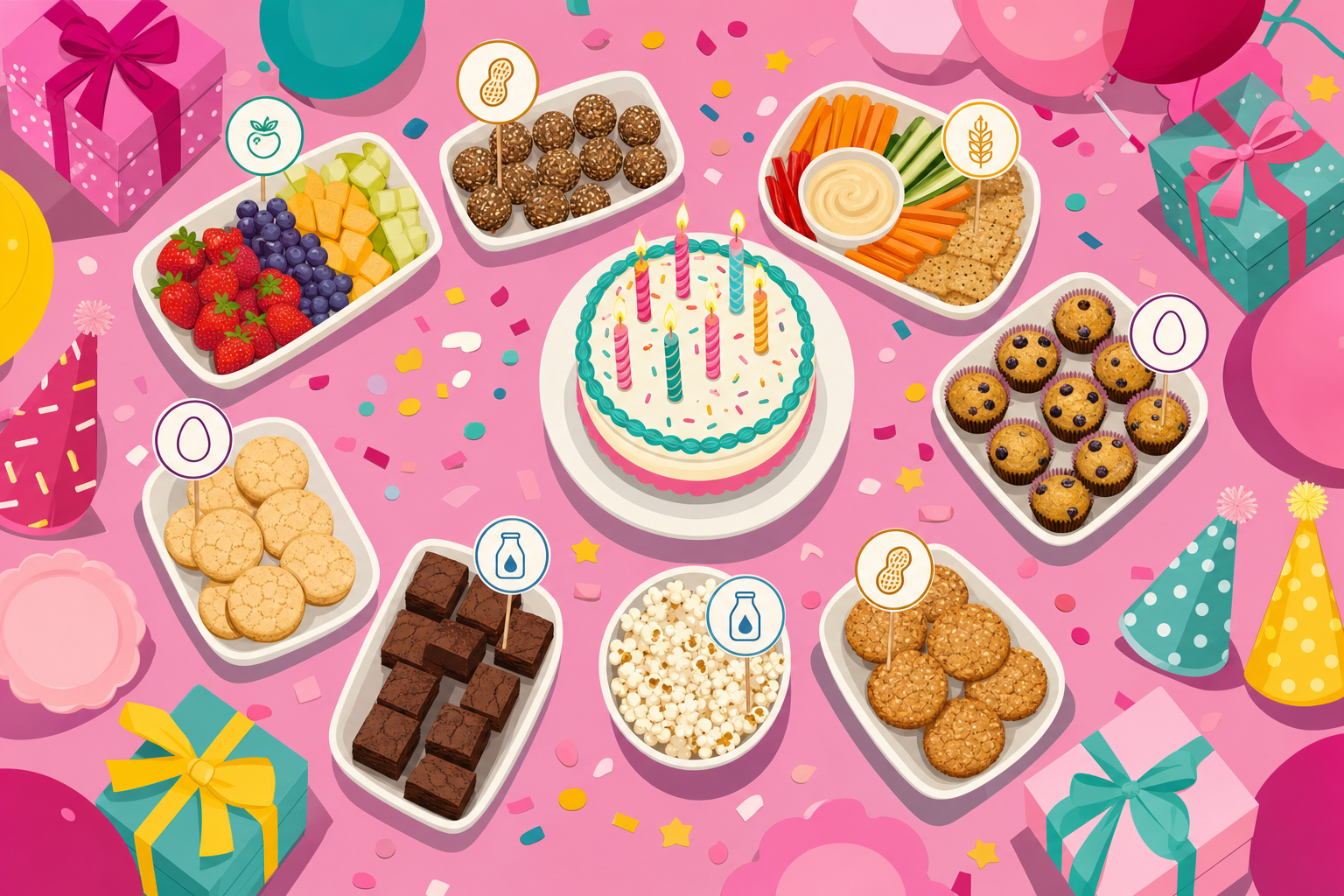
How to Plan a Kids' Birthday Party for Food Allergies When You Don't Know What Every Child Can Eat
You're staring at a guest list of 15 kids and you have no idea which ones can't have peanuts, which ones get hives from eggs, and which one's mom texted you last year about a "tree nut situation" you never fully understood. This is the part of party planning nobody warns you about: feeding a room full of kids whose parents you barely know, safely, without turning the cake table into a liability.
The good news is you don't need to become an allergist. You need a system: ask the right question at the right time, build a menu that avoids the big risks by default, and set up the food table so cross-contamination isn't left to chance. Here's the workflow.
Ask Before the Party, Not at the Door
Most allergy problems at parties happen because the host asked too late or too vaguely. "Any allergies?" on a group text gets ignored or half-answered. You need it built into the invitation itself, with a deadline.
Try this wording on your invite or RSVP card:
"We want every kid to enjoy the snacks! Please reply by [date] with any food allergies or restrictions so we can plan the menu. If your child has a severe allergy, feel free to send a safe treat with them, we're happy to keep it separate and labeled."
This does three things: it signals you're taking allergies seriously (so parents actually respond), it gives you a firm cutoff so you're not shopping the morning of with half your answers missing, and it opens the door for parents of kids with severe allergies to opt into sending their own food without feeling awkward about it.
If you're still working out the rest of your invite, our guide to no-gifts birthday invitation wording has templates you can combine with the allergy line above. And if replies are trickling in slowly, this RSVP follow-up timeline will help you know exactly when to send a reminder instead of just hoping people respond.
The Allergy-Friendly Menu Decision Tree
Once RSVPs are in, you'll usually have one of three situations. Here's how to handle each without overhauling your whole menu.
If you have zero confirmed allergies (or didn't get full replies):
Default to a menu that's naturally free of the top allergens. This protects you even against allergies nobody mentioned.
- Fresh fruit skewers or a fruit bowl
- Plain potato chips (check the bag, some share lines with nut products)
- Popcorn (air-popped, no butter blends with dairy)
- Rice-based snacks instead of wheat crackers
- Sunflower seed butter and jelly sandwiches instead of peanut butter
- Cupcakes from a bakery that lists allergens, or a dairy-free, egg-free box mix
If you have one or two confirmed allergies:
Build the whole menu around those kids instead of making a separate plate for them. If one child can't have dairy, choose a dairy-free cake for everyone rather than a special slice. It's less work than it sounds and nobody feels singled out.
If you have a severe or complex allergy (multiple allergens, anaphylaxis risk):
This is when you lean on the parent. Ask them directly what brands they trust and whether they'd rather send a labeled, sealed treat bag for their child. Most parents of kids with serious allergies have a go-to safe snack they're relieved to provide themselves.
Your Food Allergy Party Checklist
Print this or screenshot it before you shop.
Two weeks before:
- [ ] Invitation sent with allergy question and RSVP deadline
- [ ] Spreadsheet or notes app list: child's name, allergy, severity if known
One week before:
- [ ] Finalize menu based on the decision tree above
- [ ] Confirm with any severe-allergy parents whether they're sending a safe treat
- [ ] Order cake/cupcakes from a bakery that provides an ingredient list
Shopping day:
- [ ] Read every label, including "may contain" statements
- [ ] Buy separate, sealed bags of chips/crackers (avoid bulk bins)
- [ ] Grab painter's tape or sticker labels for the food table
Day before/morning of:
- [ ] Wash all serving dishes and utensils, even new ones
- [ ] Set aside one clean cutting board and knife just for allergen-free prep
- [ ] Pack any epi-pens or meds a parent dropped off, in one visible spot
Cross-Contamination at the Food Table
This is the step most party advice skips, and it's where accidents actually happen. A peanut-free cupcake sitting next to a bowl of trail mix with a shared serving spoon is still a risk.
Set up the table like this:
- Group by allergen status, not food type. Put all the allergen-free items together on one end, clearly labeled, rather than scattering them next to their "regular" counterparts.
- One serving utensil per dish, always. No shared tongs or spoons between items.
- Label everything in plain language. "Nut-free," "dairy-free," not just ingredient lists kids and some adults won't stop to read.
- Keep any parent-sent safe food in its own sealed container, opened only by that child or their parent, not mixed onto shared platters.
- Wipe the table between food setup and gift opening if kids are going to sit there later, crumbs travel.
If you're also worried about keeping younger guests occupied while the food table gets set up, screen-free activity stations work well as a distraction. Themed coloring sheets from Chunky Crayon make an easy party activity station that keeps kids seated and calm away from the snack table while you finish setup.
When a Parent Wants to Send Their Own Food
Some parents will always prefer to bring their child's own cupcake or snack bag, even for a fairly mild allergy. Let them. It's not a judgment on your planning, it's one less thing they have to worry about during the party.
When this happens:
- Ask them to label it with the child's name
- Store it separately from the shared food, ideally in the fridge or a cooler if it needs to stay cold
- Let the birthday child's parent (you) hand it to that kid directly at snack time, rather than leaving it on the shared table where another child might grab it by mistake
This small handoff step prevents the most common mix-up: another kid eating the "special" cupcake because it looked more interesting.
The Bottom Line
You don't need a perfect system, you need a repeatable one: ask early with a deadline, default to allergen-friendly basics when in doubt, label and separate at the table, and let parents of kids with serious allergies opt into sending their own safe food. Do those four things and you'll host a party where every kid, including the ones whose allergies you found out about the week before, gets to eat cake without anyone standing guard over the snack table all afternoon.