October 15, 2026
Birthday Party Games for Shy Kids: A Low-Pressure Plan
Help shy kids join birthday party games with low-pressure, no-elimination activities designed for ages 5 to 10. Try this free 90-minute playbook today!
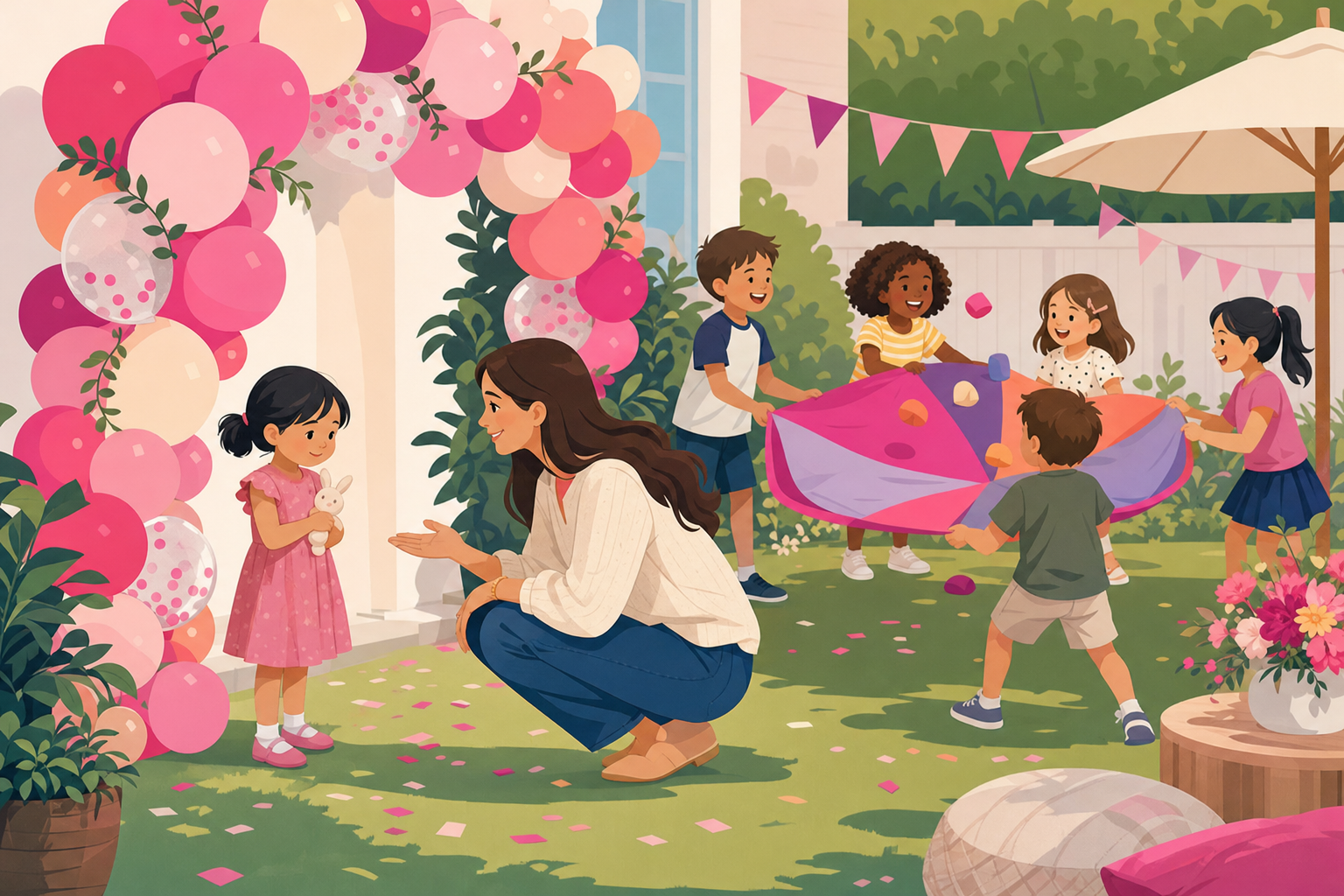
How to Get Shy Kids to Join Birthday Party Games Without Forcing Them
Your child is standing at the edge of the yard, arms crossed, watching ten kids scream through a game of freeze dance. You know if you push, they'll shut down completely. If you ignore it, they'll spend the whole party on the sidelines feeling left out. Here's the thing: you don't have to choose between those two bad options.
Shy and cautious kids don't need to be coaxed, bribed, or singled out ("Come on, everyone's waiting for YOU!"). They need a game plan that lets them ease in on their own terms. This is a full 90-minute structure built for mixed confidence levels, so your social butterflies and your watchers can both have a good time at the same party.
Why Typical Party Games Backfire for Shy Kids
Most birthday party games for shy kids fail for one simple reason: they spotlight the individual. Musical chairs, pin the tail, "everyone go around and say your favorite animal" icebreakers. All of it puts one child in front of a group while everyone watches and waits.
For an outgoing kid, that's fun. For a cautious kid, that's the exact scenario their nervous system is trying to avoid. Add elimination (you're out, go sit down) and you've created a second problem: now the shy kid who finally tried is publicly removed in front of peers.
The fix isn't fewer games. It's different games, plus a structure that doesn't force anyone into the spotlight before they're ready.
The 90-Minute Plan: Built for Mixed Confidence Levels
This birthday party plan for mixed confidence levels works because it moves from low-pressure to higher-energy gradually, and it always keeps an escape hatch open.
Minutes 0 to 15: Arrival station, not a greeting line
Skip the "everyone say hi and introduce yourself" circle. Instead, set up one simple hands-on table activity right at the entrance (stickers, a build-a-thing station, or a coloring corner). Kids can arrive, sit down, and start doing something immediately without being watched or asked to perform. Themed coloring sheets from Chunky Crayon make an easy party activity station here, since you can match them to the birthday theme and kids can jump in whenever they're ready, no instructions needed.
This also solves the awkward 15 minutes before all guests arrive, which is exactly when shy kids feel most exposed.
Minutes 15 to 35: Parallel play games (no turns, no audience)
These are quiet birthday party activities where every kid is doing the same small task at the same time, nobody is watched individually. Good options:
- Scavenger hunt in pairs (pair your shy child with a sibling, cousin, or one gentle friend)
- Giant bubble station where everyone pops bubbles at once
- A simple craft everyone works on side by side
Nobody takes a turn, nobody is "it," nobody waits in a line to be watched. This is the heart of low-pressure birthday party activities: the structure removes the spotlight entirely.
Minutes 35 to 55: Team games, not individual games
Now you can raise the energy, but keep it team-based. Relay races, a group balloon toss, a cooperative "build the tallest tower" challenge. Teams dilute pressure because no single kid is being watched or judged. This is where birthday party games without elimination matter most: structure it so teams score points together rather than kids getting knocked out one by one. Nobody sits out, nobody loses face.
If your shy child still hangs back, let them take a "helper" role (holding the bucket, counting the score, handing out balloons). That's full participation without direct performance pressure.
Minutes 55 to 75: The high-energy game, with an opt-out zone already built in
This is your dance-off, piñata, or freeze game, whatever the loud kids have been waiting for. Run it as planned. But set up a clearly visible, non-punished opt-out zone nearby (a bean bag, a coloring table, a quiet corner with a puzzle). Frame it out loud to the whole group before you start: "If you want a break, the comfy corner is right there, hop back in anytime." When it's an option for everyone, not a special accommodation for one kid, nobody feels singled out.
Minutes 75 to 90: Cake, cool-down, low-stakes sing-along
Energy naturally drops here. This is often when shy kids relax most, because the structure has loosened and nobody is being asked to perform. Let it stay unstructured.
How to Include Shy Children Without Singling Them Out
The biggest mistake parents make is trying to fix the shyness in the moment. Don't announce it, don't apologize for it, don't say "she's just shy" in front of the group. Instead:
- Give a job instead of a spotlight (scorekeeper, music button-pusher, line leader at the back)
- Let them watch one full round before joining; never require participation on round one
- Pair them with one trusted kid rather than dropping them into the whole group at once
- Use parallel activities (everyone doing their own version at the same time) instead of sequential ones (everyone watching while one kid goes)
This same logic works outside of games, too. If you've used a sticker chart to build confidence for new or overwhelming situations, you already know the pattern: small steps, no public pressure, credit for showing up even if they don't fully participate.
What to Prep Ahead of Time
A few supplies make this plan run itself:
- One quiet table activity for arrival (coloring sheets, stickers, small building toys)
- Team markers (two colors of wristbands or stickers) so team games are visually obvious
- A designated opt-out zone with a puzzle, book, or coloring supplies
- A simple schedule taped in the kitchen so you're not improvising on the fly
If you're setting up the party itself and need the kids occupied while you handle decorations, this guide on keeping young kids busy during party setup pairs well with this plan, since the same quiet activity table can double for both.
And if rain forces everything indoors last minute, you'll want this rainy day birthday backup checklist on hand, because a smaller indoor space actually makes the low-pressure structure even more important.
The Bottom Line
You don't need to force a shy child into games to make sure they have a good birthday party experience. You need a structure that doesn't require anyone to perform alone, that offers jobs instead of spotlights, and that keeps an opt-out option visible for every kid, not just yours.
Run the 90 minutes in this order (quiet arrival, parallel play, team games, high-energy game with an opt-out zone, cool-down) and you'll likely find your shy child joins more than you expected. Not because they were pushed, but because nobody ever made them the center of attention until they were ready to be.