October 3, 2026
Late Guests? A 20-Minute Birthday Party Arrival Plan
Kids birthday party late arrivals got you stressed? Try this one-adult, low-prep 20-minute arrival plan to keep kids busy with zero complicated setup.
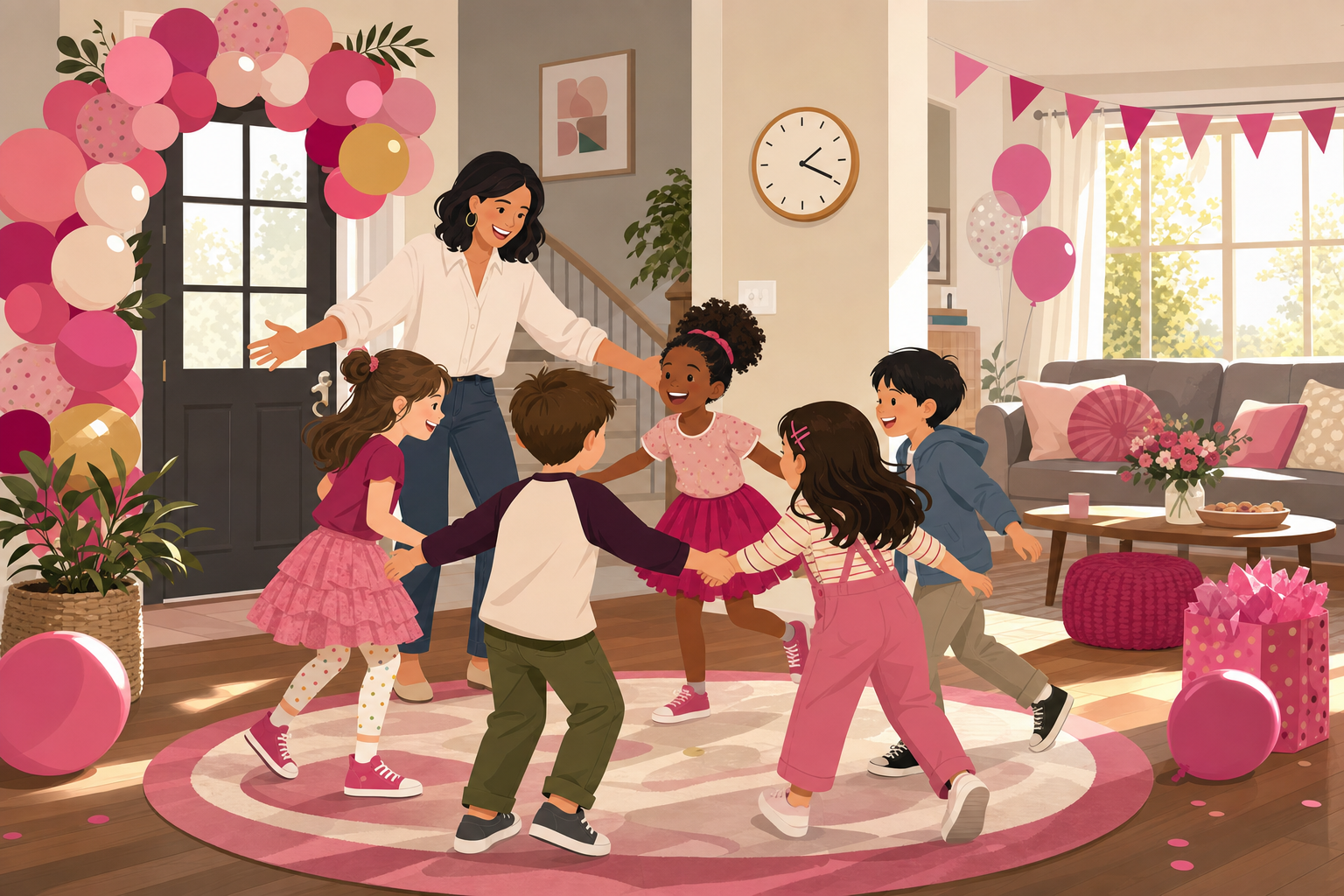
The invitation said 2:00. It's 2:14, three kids are here, two are still in the driveway saying goodbye to a sibling in the car, and your birthday kid is already asking why nobody wants to play with them. This stretch, the arrival window, is the part nobody plans for, and it's the part that makes or breaks the whole party's energy.
Most party schedules jump straight from "guests arrive" to "main activity" like it happens on cue. In real life, guests trickle in over 10 to 30 minutes, and you're the only adult trying to greet parents, wrangle shoes, and keep kids from bouncing off the walls while you wait for everyone else. Here's a plan that handles that gap without extra setup, extra hands, or extra stress.
Why the First 20 Minutes Wreck the Whole Party
When kids arrive to a party with no clear job, they default to one of three things: clinging to a parent, wandering off to find something breakable, or amping each other up until the energy is impossible to bring back down. None of that is anyone's fault. Kids don't know what to do with themselves in an unstructured space, especially one full of unfamiliar faces and a pile of presents they're not supposed to touch yet.
The fix isn't a bigger activity. It's a small, boring-sounding structure that gives every kid something to do the second they walk in, so you're not improvising crowd control while also answering the door.
The One-Adult, 20-Minute Arrival Plan
This plan assumes you're the only adult on greeting duty and you have zero extra setup time. Think of it in four short blocks.
Minutes 0 to 5: The landing spot. Pick one table or rug near the entrance and call it the "check-in station." As each kid arrives, hand them one small, identical task: a name tag to decorate, a sticker to pick, or a single puzzle piece to add to a shared poster. It's not an activity, it's a landing pad. It gives their hands something to do while you talk to the parent dropping them off.
Minutes 5 to 10: The low-stakes mixer. Once two or three kids are in, start a simple seated or standing activity that doesn't require full attendance to work, like a quiet scavenger hunt around one room or a "find something [color]" game. New kids can join mid-activity without anyone having to explain complicated rules.
Minutes 10 to 15: The flexible holding pattern. This is your buffer. If guests are still arriving, keep the mixer loose and let kids rotate in. If everyone's there early, this block can quietly extend the fun without anyone noticing the schedule shifted.
Minutes 15 to 20: The bridge to the main event. Give a two-minute warning, then transition straight into your planned party activity. Because kids have already been doing something low-key, this handoff feels natural instead of like a sudden reset.
If you want the full 90-minute version of what comes after this window, from main activity through cake and goodbyes, the 90-minute party plan built around getting kids playing together picks up right where this arrival block leaves off.
Low-Prep Arrival Activities That Actually Work
Every activity here uses stuff you likely already have, and none of it needs explaining to a group of kids who don't know each other yet.
- Sticker name tags. Blank labels, a cup of stickers, done. Kids personalize their own tag while waiting.
- One shared poster. Tape up butcher paper or a big piece of cardboard and let each arriving kid add a drawing, handprint, or sticker to a "build-a-birthday-scene" poster.
- I-spy bingo. A simple grid of common party items (balloon, cake, dog, red cup) that kids check off as they spot them. No reading required if you use pictures.
- Freeze dance, low volume. One phone, one speaker, pause and go. Works with two kids or ten, and new arrivals jump in instantly.
- Coloring station. A stack of printed sheets tied to your party theme keeps kids seated and calm without any instructions needed. Themed coloring sheets from Chunky Crayon make an easy, no-prep option here since you can match them to almost any theme in minutes.
Pick one, not all five. The goal is a single activity that can absorb new kids without restarting, not a rotating lineup you have to manage.
Transition Language That Moves Kids Without a Fight
The biggest arrival-plan killer isn't the activity, it's the transition. Kids mid-sticker-tag don't want to suddenly stop for a new instruction. Use short, predictable phrases so moving from one block to the next doesn't feel like a surprise.
- "Two more minutes on tags, then we're doing a color hunt together."
- "When you hear the music stop, freeze like a statue, that's the signal we're switching games."
- "Last one to join the poster gets to pick the next song."
Saying the same type of cue every time (a countdown, a sound, a simple challenge) trains the group to expect transitions instead of resisting them. This matters even more if you've got siblings of different ages in the mix, since what holds a 4-year-old's attention looks different from what holds a 9-year-old's. If that's your situation, these no-prep ideas for keeping siblings of different ages busy indoors pair well with the arrival window because they don't need a big age-matched group to work.
What to Do When Guests Trickle In Over 30 Minutes
Sometimes the 20-minute window stretches. Traffic, nap schedules, a sibling meltdown in someone else's car, it happens. A few adjustments keep things from falling apart:
- Loop the mixer activity instead of ending it on schedule. A scavenger hunt or freeze dance can run indefinitely with no extra prep.
- Give the birthday kid a helper role, like handing out stickers or leading the countdown. It keeps them engaged instead of watching the door.
- Resist starting the main activity at half capacity. Kids who missed the opening instructions often disengage later. It's easier to stretch the arrival block than to re-explain a game twice.
- Set a hard cutoff. If you're still missing guests at the 30-minute mark, start the main event anyway. Late arrivals can be folded into the mixer-style buffer activity instead of the main game.
If no-shows are a recurring headache, it's worth tightening up your RSVP process ahead of time. A clear RSVP follow-up timeline for getting a real headcount can cut down on the guessing game before the party even starts.
The Takeaway
You don't need a complicated setup to survive the arrival window, you need one landing-pad activity, one flexible mixer, and a couple of transition phrases you repeat on loop. That's it. The goal isn't to entertain kids for 20 minutes, it's to give them something to do with their hands so you can greet parents, breathe, and start the real party with everyone already calm and in the room.