June 25, 2026
2-Hour Birthday Party Timeline for 5-Year-Olds (No Games!)
Discover a proven minute-by-minute birthday party schedule for 5-year-olds that keeps high-energy boys and quiet kids happy without structured games or chaos.
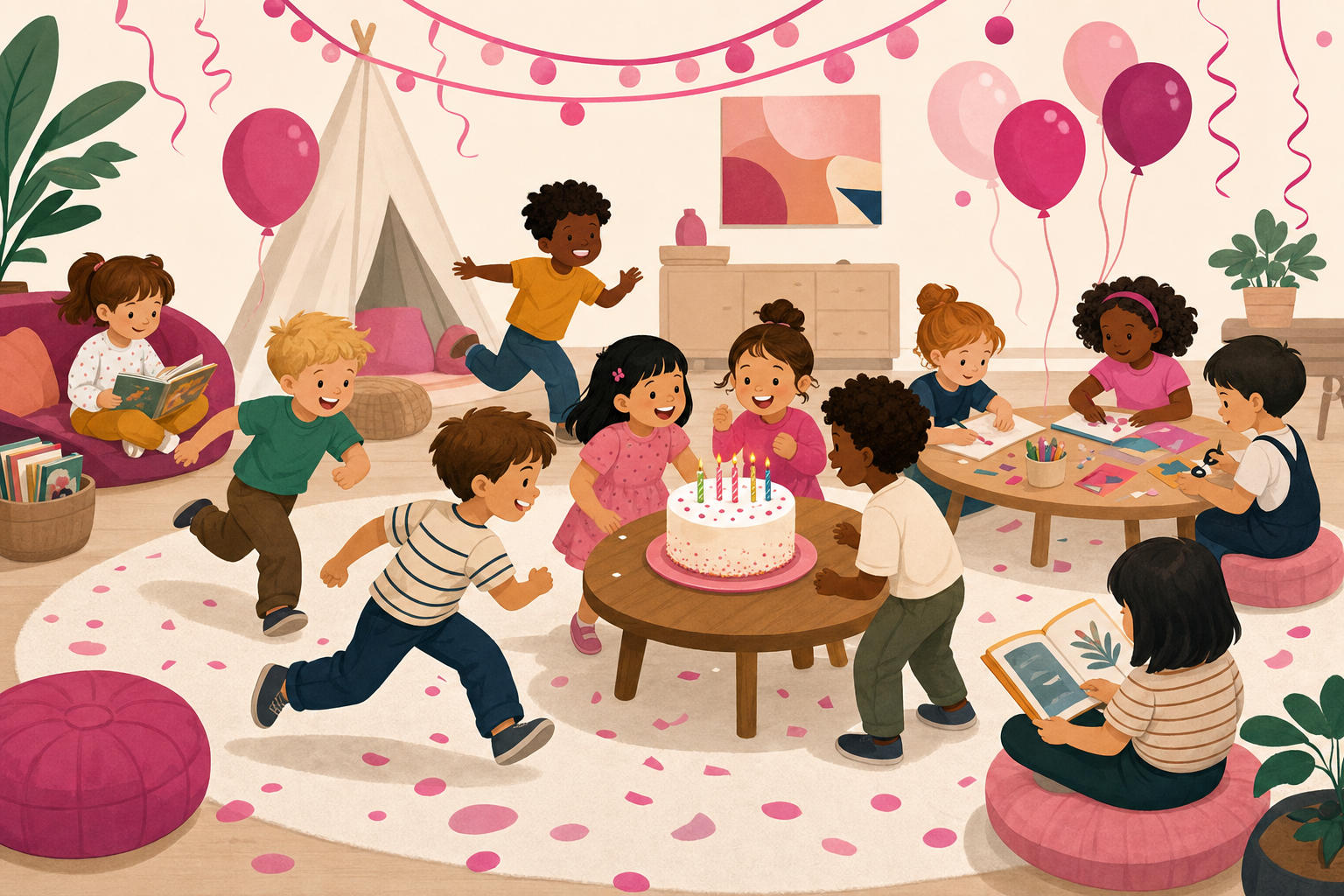
A Minute-by-Minute 2-Hour Birthday Party Timeline for a 5-Year-Old That Balances High-Energy Boys and Quiet Kids Without Structured Games
You've invited eight 5-year-olds to your living room, and half of them are already wrestling on the couch while the other half hide behind their parents. A structured relay race sounds like a disaster waiting to happen, but you still need a plan that keeps everyone moving without forcing anyone into a competitive game they'll melt down over.
Here's a tested birthday party timeline for 5 year old kids that works for a two-hour party when your guest list includes both high-energy kids and quieter ones. No elaborate games required.
Why Two Hours Is the Sweet Spot for 5-Year-Olds
Most parenting blogs will tell you to "keep it short," but they don't explain how long should a 5 year old birthday party be in actual minutes. Two hours gives you enough time to let kids settle in, burn energy, eat cake, and leave before the overtired meltdowns start.
Five-year-olds can handle longer stretches of free play than toddlers, but they still need clear transitions. This birthday party agenda template preschool parents can actually use gives you that structure without turning you into a camp counselor.
The 2-Hour Birthday Party Timeline (Minute by Minute)
0:00 to 0:20, Arrival and Free Play Setup
What's happening: Kids arrive, parents drop off (or hover), and everyone gets comfortable.
What you do: Set up three simple activity stations in different areas. No instructions needed. Think big motor (a pile of cushions for jumping), creative (playdough or a big cardboard box with markers), and quiet (books or simple puzzles). High-energy kids will gravitate to the cushions. Quiet kids will head for the books. Nobody has to perform.
Greet each child at the door, point them toward the stations, and let them choose. If you're worried about the transition from drop-off chaos to actual play, screen-free activities for bored 4-year-olds offers similar setups that work for this age group.
Why this works: Forced group activities at the start stress out kids who need time to warm up. Free stations let everyone regulate at their own pace.
0:20 to 0:50, Outdoor Play or Big Motor Time
What's happening: Burn off the biggest burst of energy before you try to serve food.
What you do: Move everyone outside or into your biggest open space. Set up three loose activities: a ball kids can kick around (no formal soccer game), a bucket of sidewalk chalk, and a few ride-on toys or scooters. Add one adult-led option for kids who want it (blowing bubbles works every time), but don't require anyone to join.
If weather keeps you inside, clear furniture and put on music for a dance party. No formal freeze dance rules. Just let them move.
Why this works: High-energy boys (and girls) need 20 to 30 minutes of full-body movement. Quiet kids can draw with chalk or push a toy at their own speed. Nobody's eliminated or waiting for a turn.
0:50 to 1:00, Transition and Hand Washing
What's happening: You're getting everyone back inside and ready to eat.
What you do: Give a five-minute warning ("We're going inside for snacks in five minutes!"). Then call everyone in, line them up at the sink, and wash hands. Play a song while they wait. This is not wasted time. It's a built-in reset that prevents the chaos of hungry kids grabbing food with dirty hands.
Why this works: Five-year-olds respond better to a clear, calm transition than a sudden "Okay, everyone inside NOW!" The hand-washing ritual also gives their nervous systems a chance to downshift before sitting.
1:00 to 1:30, Snack, Cake, and Singing
What's happening: Everyone sits, eats, and celebrates the birthday kid.
What you do: Serve simple snacks first (crackers, cheese, fruit). Let kids eat for 10 minutes. Then bring out the cake, sing, blow out candles, and serve. Keep the table time to 30 minutes max. Five-year-olds don't sit longer than that without squirming.
If you're managing the whole party solo and need ideas for keeping kids engaged before this moment, the post on planning a single-activity birthday party for high-energy boys covers similar logistical challenges.
Why this works: Serving food at the one-hour mark gives kids time to arrive and play, but doesn't wait so long that someone has a hunger meltdown. Cake at the midpoint also signals "we're halfway done" to parents who are wondering when to come back.
Structuring the Second Hour Without Structured Games
1:30 to 1:50, Calm Activity Stations
What's happening: Kids have eaten sugar and need something to do that isn't running in circles.
What you do: Set up two or three calm stations. A coloring table with themed sheets (like printable coloring pages from Chunky Crayon if you want zero prep), a sensory bin with rice or beans and scoops, or a simple craft like decorating a paper crown. Let kids rotate on their own. No timer, no forced participation.
High-energy kids might only stay at one station for three minutes before moving to the next. That's fine. Quiet kids might spend the full 20 minutes coloring. Also fine.
Why this works: After cake, kids need a chance to settle before pickup. Forcing them into a group game when their blood sugar is spiking leads to tears. Stations give them autonomy and a soft landing.
1:50 to 2:00, Goodie Bags and Goodbye
What's happening: Parents arrive, kids grab their bags, and everyone leaves before someone gets overtired.
What you do: Have goodie bags (or a small party favor) waiting by the door. Hand them out as kids leave. Thank each child for coming. Keep it short. If a parent lingers to chat, that's fine, but don't feel like you need to host for another 20 minutes.
Why this works: Ending exactly at two hours respects everyone's schedule and gets kids home before the post-party crash. A clear goodbye ritual also prevents the awkward "when are we actually leaving?" confusion.
How to Adjust This Kids Birthday Party Schedule 2 Hours Template
If your party is at a park, extend outdoor play to 40 minutes and shrink arrival time to 10 minutes (kids settle faster outside). If you're at home in winter, swap outdoor play for an indoor obstacle course using couch cushions, painter's tape lines on the floor, and a tunnel made from chairs and a blanket.
If you have more quiet kids than high-energy ones, flip the script: start with a calm activity like playdough, move into moderate outdoor play (bubbles and sidewalk chalk only), and skip anything that looks like a race.
If you're planning the whole party from scratch and need a realistic prep timeline, the kids party planning timeline guide walks through an eight-week plan that prevents last-minute panic.
What to Skip Entirely
Don't plan relay races, musical chairs, or any game with elimination rounds. Five-year-olds can't handle losing gracefully yet, and the kid who gets out first will spend the next 10 minutes crying or hitting someone.
Don't over-decorate. A banner and some balloons are enough. You're not hosting a wedding.
Don't feel obligated to entertain every second. Boredom is not an emergency. Kids this age are capable of finding something to do if you give them space and a few loose materials.
The One Thing That Matters Most
The best birthday party timeline with cake and games (or in this case, no games) is one you can execute without losing your mind. If this schedule feels like too much, cut an activity. If it feels too loose, add one more station during free play.
The goal isn't a Pinterest-perfect party. It's a two-hour window where kids feel safe, fed, and entertained enough that nobody cries and you don't collapse afterward. That's a win.