May 17, 2026
Low-Stress Birthday Party Ideas for Shy Kids (Ages 5-8)
Discover gentle birthday party ideas perfect for introverted children who feel overwhelmed by crowds. Small group activities, quiet games, and stress-free planning tips inside.
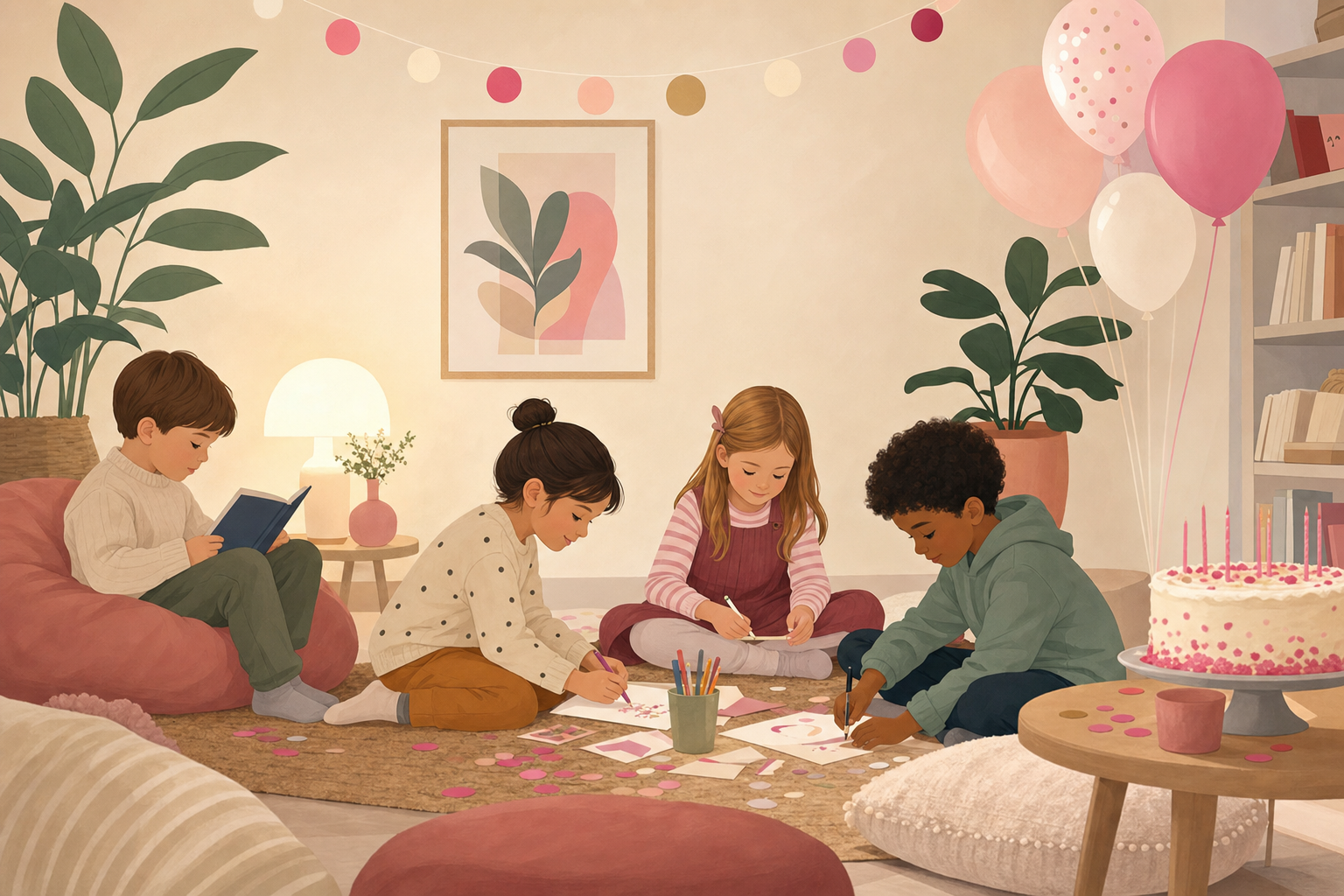
How to Plan a Low-Stress Birthday Party for a Shy 5- to 8-Year-Old Who Gets Overwhelmed by Big Crowds
Your child has been talking about their birthday for weeks, but when you mention inviting the whole class, they go quiet or start picking at their fingernails. Sound familiar? Planning birthday party ideas for a shy child means throwing out the loud-music-bouncy-castle playbook and building something that actually fits your kid.
A low stress birthday party at home doesn't mean boring. It means knowing your child's limits, keeping the guest list tight, and pacing activities so no one melts down (including you). Here's how to throw a small birthday party that feels like a celebration, not an endurance test.
Keep the Guest List Small (Really Small)
Forget the "invite everyone" rule. For a birthday party for an introverted kid, three to five guests is the sweet spot. Your child can actually talk to everyone, no one gets lost in the chaos, and you can supervise without needing a whistle.
Let your child pick who comes. If they hesitate or name more kids than you think they can handle, ask: "Who are the friends you like playing with at recess?" or "If you could only invite three people, who would it be?" This isn't about hurting feelings. It's about creating an environment where your child can relax and enjoy their own party.
Keep the party short, too. Two hours is plenty. A small birthday party for a 5-year-old can run even shorter (90 minutes) if your kid tires easily. You're aiming for "I want to do that again!" not "I need three days to recover."
Set Up Quiet Zones Before the Party Starts
Even with a small group, your child might need a break. Before guests arrive, designate a "chill zone" where your birthday kid (or any overwhelmed guest) can retreat without drama.
This could be their bedroom with the door cracked, a cozy corner with pillows and books, or even a tent in the backyard. Let your child know ahead of time: "If you need a few minutes alone, you can go to your room. Just let me know, and I'll make sure no one follows you."
Stock the zone with a comfort item (favorite stuffed animal, headphones, a coloring book). Speaking of coloring, themed coloring sheets from Chunky Crayon make a perfect low-key activity station that shy kids can do solo or side-by-side without forced interaction.
Having an escape hatch takes the pressure off. Your child knows they're not trapped, which paradoxically often means they won't need to use it.
Choose Quiet Birthday Party Activities That Don't Require Performing
Loud group games where everyone watches one kid at a time? Hard pass. The best small group birthday party games let kids participate without being the center of attention.
Try these low-pressure options:
- Scavenger hunt: Kids work together or in pairs. No one's on stage. Print a simple list (find something red, something soft, something that starts with B) and let them roam.
- Craft station: Set up a table with supplies for decorating picture frames, making friendship bracelets, or building with modeling clay. Kids can chat or work silently. Both are fine.
- Cooperative board games: Games like Hoot Owl Hoot or Race to the Treasure have everyone working toward the same goal. No winners, no losers, no kid feeling singled out.
- Outdoor free play: If you have a yard, let kids explore. Bubbles, sidewalk chalk, a sandbox. Unstructured time lets shy kids warm up at their own pace.
Skip musical chairs, pin the tail on the donkey, or anything that eliminates players. Your child doesn't need the stress of being "out," and neither do their friends.
Front-Load the Party So You Can Coast Later
The first 20 minutes are the hardest for a shy child. Guests arrive at different times, there's doorbell chaos, everyone's looking around. Plan for this.
Have one simple activity ready the moment the first guest walks in. A coloring station, a bin of Legos, or a puzzle on the coffee table. This gives early arrivals something to do (and gives your child a task besides making eye contact and small talk).
Once everyone's there, do the structured activities first (scavenger hunt, craft, one planned game). Save free play and cake for the end. By then, your child will be warmed up, and kids can scatter into smaller conversations without you needing to orchestrate.
This is the same principle behind a morning routine chart for kids that frontloads the hard tasks. Start strong, finish easy.
Rethink Cake and Singing
The happy-birthday song with everyone staring at your kid while they sit frozen in front of a flaming cake? For some children, that's the worst 30 seconds of the party.
You have options. You can skip the song entirely (I promise, no one will report you). You can do a quick countdown ("Okay, on three we all say happy birthday!") that's over in two seconds. Or you can sing while your child is distracted, like while they're playing, then casually bring out the cake afterward.
Some parents let the birthday child blow out candles alone in the kitchen, then bring the cake out already cut. Others do cupcakes so there's no ceremonial moment at all. The goal is cake in bellies, not a performative milestone your child dreads.
If your child loves routine and structure (like many introverted kids do), a visual schedule can help. Just like a bedtime routine chart stops kids from stalling at night, a party schedule posted on the fridge shows your child what to expect and when. Scavenger hunt, then craft, then snack, then cake, then goodbyes. No surprises.
Prep Your Child (and the Parents) Ahead of Time
A few days before the party, walk your child through what will happen. "Three friends are coming over. We'll do a scavenger hunt, then make bracelets, then have cake. The party will last two hours, and then everyone goes home. If you need a break, you can go to your room anytime."
This isn't coddling. It's giving your child the information they need to mentally prepare, just like you'd want a heads-up before a work presentation.
When you send invitations, keep the tone low-key. You don't need to announce "This is a party for a shy child," but you can include helpful details: "We're keeping it small and low-key. Drop-off is fine, or you're welcome to stay. Party runs 2–4 p.m."
Some parents appreciate knowing the vibe. Others will stay because their own kid is nervous. Either way, you've set expectations.
What to Do If Your Child Shuts Down Mid-Party
Even with perfect planning, your child might hit a wall. They might go quiet, cling to you, or ask when everyone's leaving. This is not a failed party. This is a kid who's done.
Give them an out without shame. Pull them aside and ask quietly, "Do you need a break, or are you ready to wrap up?" If they want to keep going, great. If not, it's okay to start winding down early.
You can say to the group, "Okay, we're going to do one last game, then it's time for cake and goodbyes." Kids are flexible. Parents get it. No one expects a 6-year-old to host like a seasoned event planner.
If your child retreats to their quiet zone, let them. Check in after a few minutes, but don't drag them back out. Sometimes five minutes of alone time is all they need to reset.
The Real Win: Your Child Felt Celebrated, Not Stressed
A successful birthday party for a child who gets overwhelmed by crowds isn't measured in Pinterest-worthy photos or a packed guest list. It's measured by whether your child felt happy, safe, and celebrated.
If they smiled at least once, played with a friend, and didn't spend the afternoon hiding in the bathroom, you nailed it. If they ask to do it again next year, even better.
Low-stress doesn't mean low-effort. It means effort spent in the right places: small guest list, quiet activities, an escape hatch, and a parent who's tuned in instead of trying to impress other adults.
Your kid doesn't need a circus. They need a few friends, a scavenger hunt, and cake. You've got this.