October 14, 2026
How to Say Siblings Aren't Invited: No Drama Guide
Learn how to say no to extra siblings at your child's birthday party with polite wording, RSVP tips, and guest list etiquette that avoids drama.
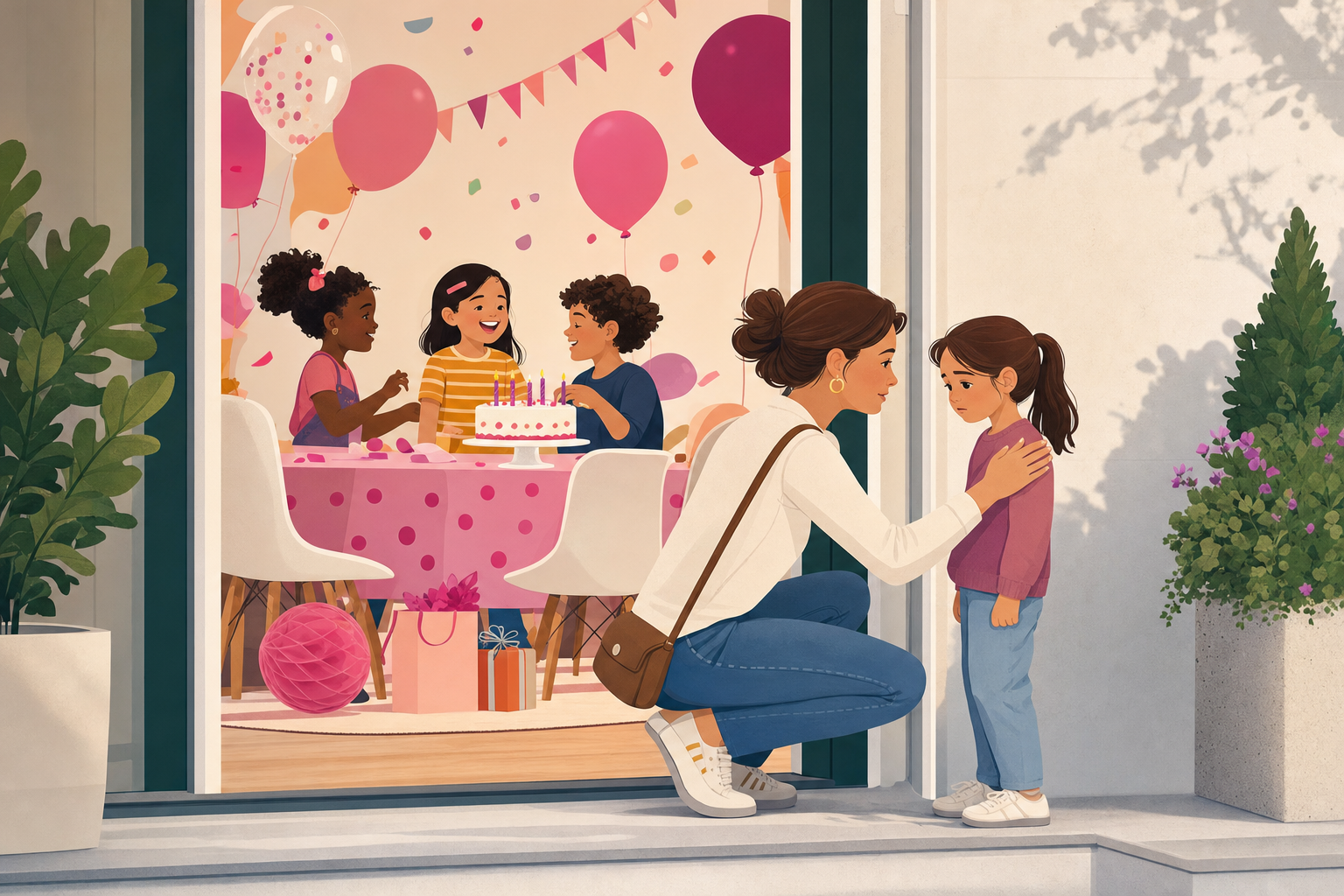
How to Say Siblings Aren't Invited to Your Child's Birthday Party Without Causing a Drama
You finalized the guest list, the venue has a strict headcount, and now you're staring at a text from another parent asking if her toddler can "just tag along" with her older kid to the party. Your stomach drops because you know saying no might mean an awkward pickup line, a hurt feeling, or worse, a parent who talks about you in the group chat. Here's the thing: you can hold the line on your guest list and keep the relationship intact. It just takes the right wording and a plan for the moment it comes up in person.
Why Siblings Aren't Automatically Invited (and Why That's Okay)
Most party venues charge per child, not per family. A trampoline park or pottery studio quoting you a per-child cost means every extra kid adds real dollars, and most venues cap capacity for safety reasons anyway. A backyard party has its own limit too: your yard, your supplies, and your own sanity all have a ceiling.
This isn't about excluding anyone out of spite. It's about resource limits that any reasonable parent understands once you frame it that way. Guest list capacity is a logistics decision, not a judgment on anyone's kid.
If you're hosting at home and want ideas for keeping the one invited kid occupied while you handle setup, a plan for keeping a child busy before guests arrive can buy you the calm fifteen minutes you need.
Invitation Wording That Prevents the Question Before It's Asked
The best sibling conversations are the ones you never have to have, because the invitation already answered the question. Vague wording like "Join us for Mia's party!" invites assumptions. Specific wording closes the loop.
Try one of these lines directly on the invite or in the digital RSVP:
- "This party is for invited guests only (siblings included if named above). We have a small venue capacity and want to make sure every child has room to play."
- "Due to venue limits, we're only able to accommodate the children listed on this invitation. We hope you understand!"
- "We'd love for [child's name] to join us! Please note we're keeping this one small, so we're not able to include siblings this time."
- For home parties: "We're keeping the guest list small this year so the backyard doesn't get too crowded. Hope to see just [child's name] there!"
Notice none of these say "no siblings allowed," which sounds harsh. They all point to a neutral reason: space, venue rules, or keeping things manageable. That reason does the work so you don't have to.
If you're using a digital RSVP tool, add a specific field: "Number of children attending (as listed on invite): ___." This makes the limit visible before anyone has to ask awkwardly.
What to Say When a Parent Asks Directly
Even with clear wording, someone will still ask. Usually it's not rude, they're just trying to solve a childcare puzzle. Have a short, warm response ready so you don't freeze and overexplain.
If a parent texts asking to bring a sibling:
"I wish I could say yes, but the venue caps us at [X] kids and we're already at that number. I know that's tough with childcare, I'm sorry!"
If a parent asks at drop-off with the sibling in tow:
"Oh, I didn't realize you'd need to bring [sibling's name] today. We're at capacity for the party, but [sibling] is welcome to grab a cupcake and I can help you find someone close by to watch them for the hour, or you're welcome to stay with them in the backyard while the party happens."
The key is to never make the parent feel like the problem. You're not rejecting their kid, you're citing a fixed number. Repeat the number if you need to. Numbers are hard to argue with; feelings are easy to misread.
When an Uninvited Sibling Shows Up Anyway
This happens more than anyone admits. A parent didn't have childcare, read the invite as a suggestion, or just didn't think it would be a big deal. You have three solid options, and none of them require a confrontation.
Option 1: Fold them in quietly. If your numbers have wiggle room (an extra slice of cake, an extra goodie bag you can scrounge), let it go for this one party. Not every battle needs to be fought at the door.
Option 2: Offer a side activity. Set up a small table away from the main group with coloring pages or a quiet toy bin. Themed coloring sheets from Chunky Crayon make an easy, no-prep activity station for a sibling who's along for the ride but not part of the official headcount. It keeps them happy without pulling them into games or cake math.
Option 3: Ask the parent to stay with them. This is the gentlest way to keep your numbers accurate for games and food without making anyone feel turned away. "Totally fine for [sibling] to be here, would you mind keeping an eye on them during the games part since we're tight on supplies?" This is honest and keeps responsibility where it belongs.
Whatever you choose, decide before the party starts. Deciding in the moment, with a nervous parent standing in your doorway, is where drama actually comes from. A plan you already agreed to in your head feels calm. A decision made on the spot feels like a confrontation.
Handling the Childcare Problem Without Guilt
Some families genuinely don't have a babysitter option, and that's a real constraint, not an excuse. If you know a family is likely to struggle with this, get ahead of it with a kind note when you send the invite: "I know childcare can be tricky, totally okay if timing doesn't work this time!" This takes the pressure off them to ask and off you to explain.
You can also suggest options without committing to hosting the sibling yourself:
- Point them toward another parent attending who might carpool or share a sitter.
- Offer a specific time window so a grandparent or neighbor could cover just that hour.
- If you're close with the family, offer a reciprocal swap for their next event.
If you're planning a party that already has a tight timeline, like one built around naptime, a structured toddler party timeline can help you explain to parents exactly why extra bodies make timing harder to pull off. Specifics make your limits easier to accept.
And if the issue is less about the party itself and more about keeping multiple kids with different ages occupied at home afterward, a routine chart for siblings with different ages can help smooth out the rest of the day once everyone's back home.
The Bottom Line
You don't need a big speech or an apologetic paragraph to keep your guest list manageable. Clear invitation wording, a short prepared response, and a calm plan for the moment someone shows up uninvited will handle 95 percent of situations without a single awkward exchange. The goal isn't to be the strictest host on the block, it's to throw a party your child can actually enjoy, with room to breathe, food that stretches, and games that work with the number of kids you planned for.