June 4, 2026
Small Birthday Party Ideas: When Your Child Wants One Friend
Your 5-year-old wants just one friend at their party, but family expects more guests? Learn how to plan an intimate celebration that honors your child's wishes.
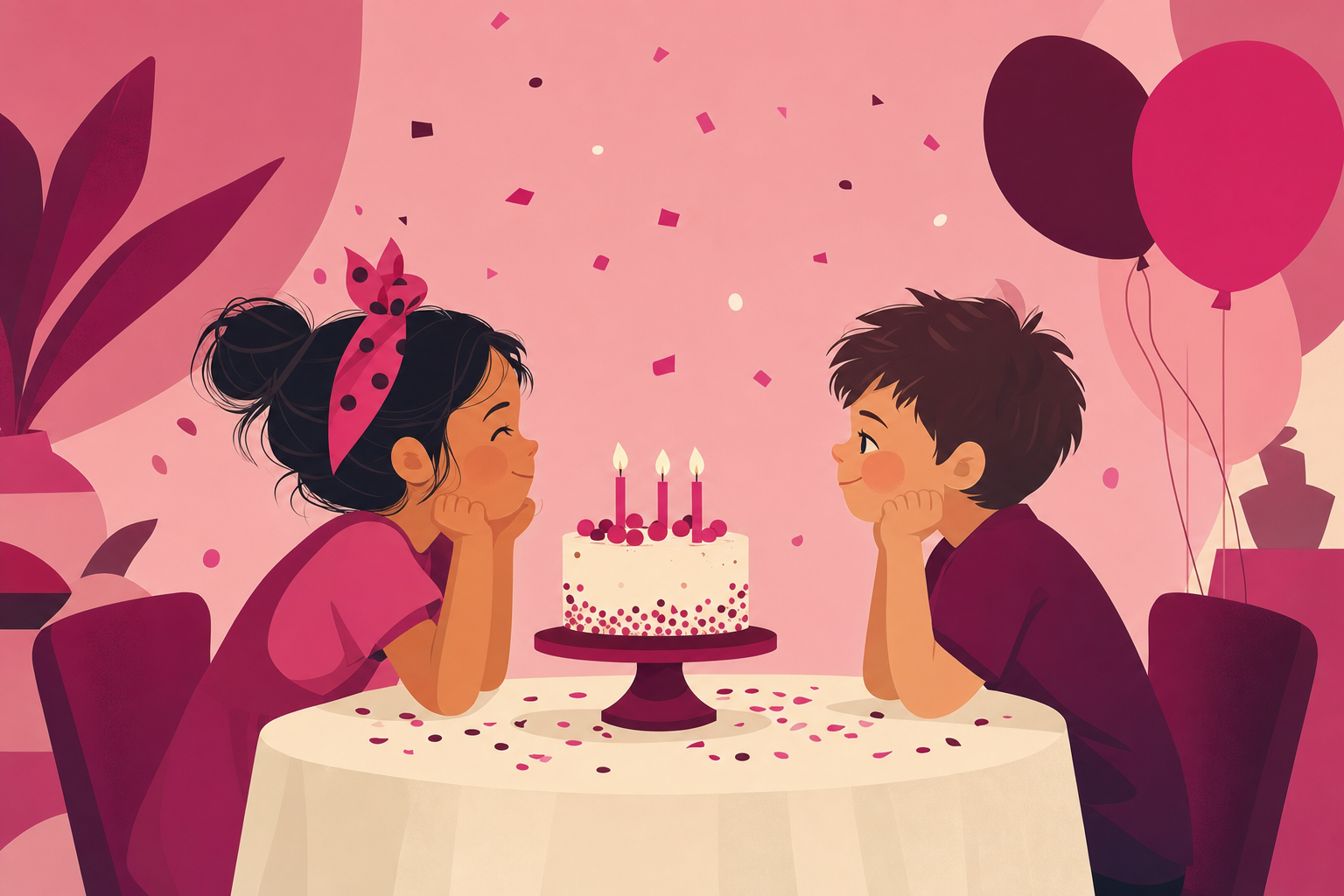
How to Plan a Birthday Party for a 5-Year-Old When Your Child Only Wants One Friend to Come, But the Family Expects a Bigger Party
Your child just told you they only want Emma (or Jake, or Sam) at their birthday party. Not the whole preschool class. Not all the cousins. Just one friend. Meanwhile, your mother-in-law is texting about venue ideas and your partner is worried the other parents will think you're snubbing them.
This is not a discipline problem. This is a mismatch between your child's actual social comfort zone and everyone else's expectations about what a "real" birthday party should look like. The good news: you can honor your child's wishes without burning bridges or making them feel like their preference is wrong.
Why Some Kids Want a One-Friend Birthday Party (And Why That's Okay)
Not every 5-year-old wants a circus. Some kids are introverts. Some are still building social stamina. Some have one best friend and genuinely don't want to share that spotlight with 15 classmates they barely know.
Respecting that preference teaches your child that their feelings matter more than performative social events. It also prevents the overstimulated meltdown that happens halfway through a party when a kid who didn't want chaos gets exactly that.
If family members push back, you can frame it this way: "We're letting them practice what a celebration feels like for them, not for Instagram." Most grandparents will soften when you put it like that.
How to Set Boundaries with Family Without Starting a Fight
This is where most parents get stuck. You've decided on a small birthday party for one friend, but now Grandma is hurt, your sibling thinks you're being weird, and your partner's college friend assumed their toddler was invited.
Here's the script: "We're doing something really low-key this year. Just immediate family and one friend. It's what [child's name] asked for, and we want them to feel heard."
Notice what you're not doing: apologizing, over-explaining, or leaving room for negotiation. You're stating a fact. If someone responds with "But what about..." you can repeat, "We're keeping it small this year. Maybe next time."
If extended family still expects a gathering, offer an alternative. A separate cake and ice cream hour with grandparents the weekend before. A FaceTime call on the actual birthday. A small celebration that's just family, separate from the one-friend party. This isn't caving, it's acknowledging that people want to celebrate your child without letting them hijack the actual event.
What a One-Friend Birthday Party Actually Looks Like
You might be worried that a birthday party when child wants only one guest will feel sad or incomplete. It won't. Here's what works:
Keep it short. Two hours max. One friend means less chaos but also less natural crowd energy, so you don't need a marathon event. Pick them up at 2 p.m., done by 4 p.m.
Choose one anchor activity. Let the kids build a fort, decorate cupcakes, do a scavenger hunt in the backyard, or pick a simple craft. You don't need a bounce house and a magician. If you want something low-effort, themed coloring sheets from Chunky Crayon make an easy party activity station that doubles as a take-home favor.
Let them lead the play. With one friend, your child will naturally fall into their usual rhythm. Don't over-program. Have a loose plan, but if they want to spend 40 minutes playing pretend under a blanket, let them.
Serve food they'll actually eat. Pizza, mac and cheese, or sandwiches cut into shapes. You're feeding two kids, not hosting a buffet.
Skip the favor bags. One friend doesn't need a goody bag. Let them take home whatever they made during the party, or wrap up a small toy as a thank-you for coming. Done.
For more ideas on making a small gathering feel intentional (not like you forgot to invite people), see our post on small birthday party ideas that make six guests feel like twenty. The same principles apply here, just scaled even smaller.
How to Handle the Invitation (And the Questions That Follow)
If you're doing a one-friend birthday party, you don't need formal invitations. A text or quick call to the other parent is enough: "Hi! We're keeping [child's name]'s birthday really small this year, just one friend. [Child's name] specifically asked if [friend's name] could come over for cake and a playdate on [date]. Does that work?"
This wording makes it clear it's intentional, not an oversight. You're not apologizing. You're not saying "Sorry it's so small" or "I know this is weird." You're stating a plan.
The other parent will almost certainly say yes and probably be relieved they're not stuck at a loud indoor play space for three hours.
If your child's school has a policy about inviting the whole class, this doesn't apply. You're not handing out invitations at school. This is a private playdate that happens to be on their birthday.
What to Do If Your Child Changes Their Mind Last Minute
Sometimes a 5-year-old will ask for a tiny party, then panic the week before and suddenly want "everyone." If that happens, pause and ask clarifying questions.
"Do you want more kids because you're worried someone will feel left out, or because you actually want a bigger party?" Often, kids are people-pleasing or reacting to a classmate's comment. If they can't articulate why, stick with the original plan.
If they genuinely changed their mind and want a few more kids, you have two options. One: add one or two more friends and keep it intimate (three to four total guests). Two: explain that this year's plan is set, and you can talk about a different kind of party next year. You're teaching them that plans don't infinitely expand just because they got nervous.
If you've already handled a similar situation with shy or anxious kids, the strategies in our guide to planning a low-stress birthday party for a shy 5- to 8-year-old apply here too. The same kid who doesn't want a crowd probably won't suddenly want one just because their birthday is two days away.
The Day-Of: How to Make It Feel Special Without Overcompensating
You might worry that an intimate birthday party for 5-year-old won't feel big enough. That your child will feel shortchanged. They won't, as long as you don't act like something's missing.
Hang a birthday banner. Put out balloons. Sing happy birthday with full enthusiasm. Take photos. Treat it like the event it is, just smaller.
Don't say things like "I know it's just you two, but..." or "Next year we'll do something bigger." That tells your child their choice wasn't good enough. Instead, say "This is exactly what you wanted, and I'm so glad we get to do it this way."
Your energy sets the tone. If you're calm and confident, the day will feel right-sized. If you're apologetic or anxious, your child will absorb that and start second-guessing themselves.
How to Handle the Aftermath (Questions from Other Parents, Extended Family, Etc.)
After the party, you might get questions. "Oh, we didn't realize [child's name] had a party!" or "Why wasn't [cousin] invited?" This is where you hold the line without being defensive.
"We did something really small this year. Just one friend. It's what [child's name] wanted." Then change the subject. You don't owe anyone a deeper explanation.
If extended family is hurt, acknowledge it once without reversing course. "I hear that you're disappointed. This year we prioritized what [child's name] asked for. Let's plan a time to celebrate together soon." Then follow through. A separate low-key family gathering (not on the actual birthday) usually smooths things over.
Some parents worry that keeping a small guest list birthday party will make their child "that weird kid" at school. It won't. Five-year-olds don't gossip about party attendance. If another child asks why they weren't invited, your kid can say "It was just me and one friend this year." Most kids will shrug and move on.
Why This Approach Works (And What It Teaches Your Child)
Planning a birthday party boundaries with family and honoring your child's preference for a one-friend birthday party does two things. First, it shows your child that their feelings and social needs are valid, even when they don't match the default. Second, it models how to set boundaries kindly but clearly.
You're not saying big parties are bad. You're saying this year, this is what works. That flexibility, that willingness to build celebrations around the actual child instead of external expectations, is a gift that lasts well past age five.
If you need help turning this same low-key energy into a printable plan for next year (or if your child does want a slightly bigger party later), Birthday Playbook gives you a ready-made checklist, invite wording, and activity ideas built around any theme. No overwhelm, no guessing, just a clear plan. Because whether you're celebrating with one friend or ten, the goal is the same: a kid who feels seen, not stressed.