June 26, 2026
Inclusive Birthday Party Planning for Kids with Disabilities
Learn how to plan a sensory-friendly, accessible birthday party for neurodivergent kids ages 4 to 8. Get venue checklists, game ideas, and tips to prevent sensory overload.
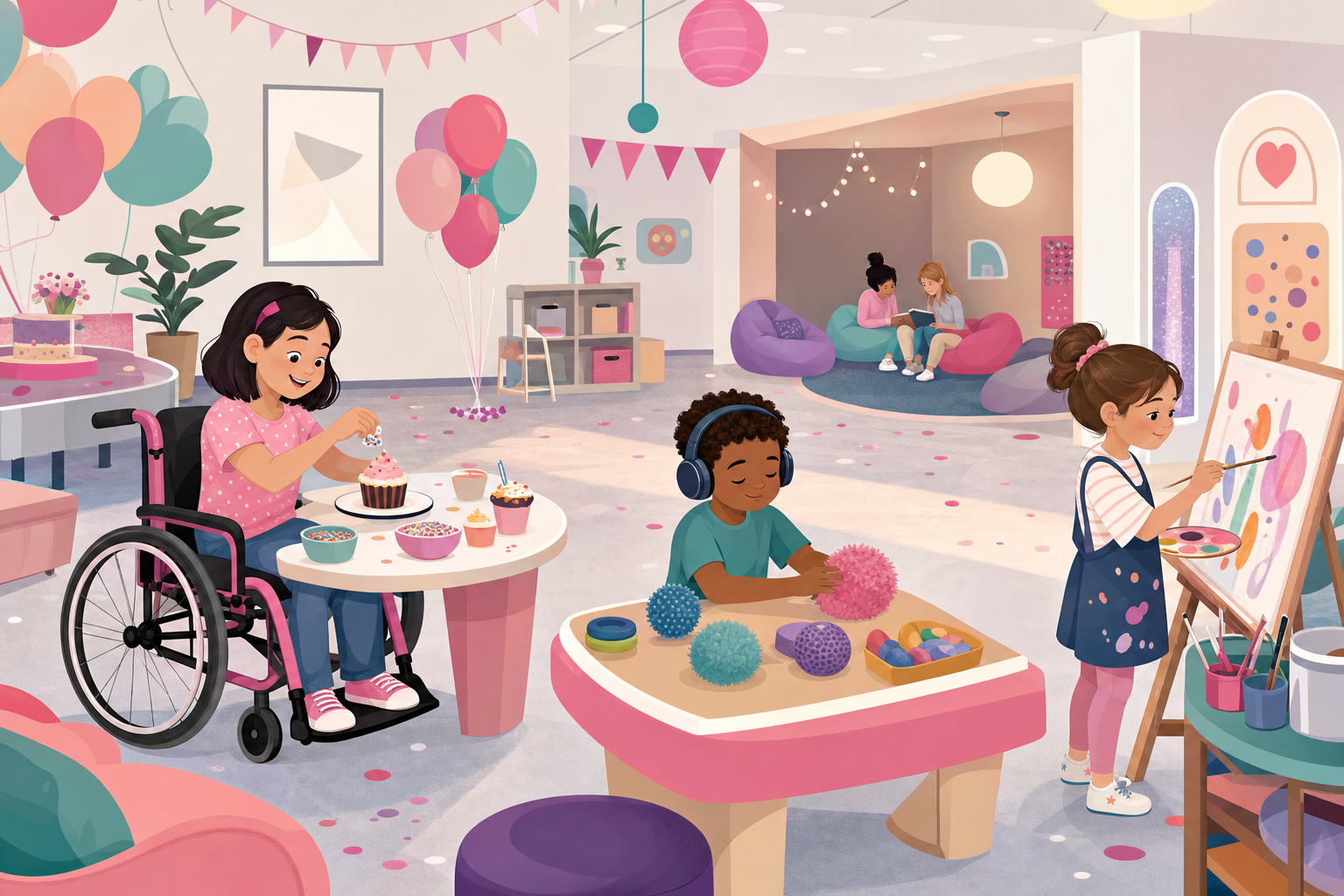
How to Plan an Inclusive Birthday Party for a Child with Disabilities or Neurodivergence (Ages 4 to 8)
You want your child to have a birthday party that feels like everyone else's, but you're worried about sensory overload, kids who can't keep up with relay races, or a venue that doesn't understand what you need. You're not even sure what questions to ask, and the last thing you want is for your child to feel overwhelmed or left out at their own party.
This is a practical guide for planning an inclusive birthday party for kids with disabilities, autism, ADHD, or sensory processing differences. You'll get a clear plan: how to choose a sensory-friendly venue, what exact questions to ask, how to adapt games for motor delays, and how to prevent sensory overload without making the party feel "less than."
Choose a Sensory-Friendly Venue (And Know What to Ask)
The right space makes everything easier. Skip venues with flashing arcade lights, loud music you can't control, or chaotic drop-in play areas where you can't predict the crowd.
Look for:
- Private or semi-private spaces where you control the guest count and noise level
- Adjustable lighting (ask if they can dim overhead lights or turn off strobes)
- A quiet breakout room or corner where a child can decompress without missing the party
- Flexible furniture (tables you can move, open floor space for kids who need to move)
- Accessible bathrooms with grab bars, wide stalls, and changing tables if needed
When you call a venue, ask these exact questions:
- Can we arrive 15 minutes early to let my child adjust to the space before guests arrive?
- Can we control the music volume or turn it off entirely?
- Is there a quiet space nearby if a child needs a sensory break?
- Are the bathrooms accessible (grab bars, wide doors, sensory-friendly hand dryers or paper towels)?
- Can we bring our own food if my child has dietary restrictions or sensory food preferences?
If the person on the phone doesn't know, ask to speak to a manager or visit in person. Many community centers, library meeting rooms, and smaller play spaces are more flexible than big franchises. If you're hosting at home, that's often the easiest option for controlling the environment.
Write Invitations That Set Expectations (And Ease Other Parents' Worries)
Good invitations do two things: they prepare guests for an inclusive birthday party for neurodivergent kids, and they reassure other parents that their kids are welcome exactly as they are.
Include:
- Start and end times (predictability helps everyone)
- A note about the party structure: "We'll have free play, cake, and one group activity. Kids can join in or take breaks as needed."
- Sensory details: "The music will be low, and there's a quiet space if anyone needs a break."
- RSVP request with dietary needs and accommodations: "Let me know if your child has any food allergies, sensory needs, or anything else that would make the party more comfortable."
Example wording: "We're keeping this party low-key and flexible. There will be free play, cake, and one group game. The music will be quiet, and there's a calm corner with books and coloring if anyone needs a break. Please let me know if your child has any dietary restrictions or if there's anything we can do to make them more comfortable."
This language normalizes accommodation and signals to other parents that you've thought this through.
Plan Inclusive Games for Kids with Motor Delays or Sensory Sensitivities
Forget relay races, musical chairs, and competitive games where someone always loses. Accessible children's birthday party planning means choosing activities where every child can participate at their own pace.
Best options:
- Scavenger hunts with visual cards (no running required; kids can work alone or in pairs; visual cue cards make this even easier)
- Craft stations (set up 2 to 3 options like decorating a picture frame, building with blocks, or coloring; kids rotate or stick with what they like; themed coloring sheets from Chunky Crayon make an easy self-directed station)
- Sensory play bins (kinetic sand, water beads, or a rice dig with hidden toys)
- Parachute games (everyone holds the edge; no running, no competition, lots of visual and tactile input)
- Bubble station (a bubble machine or wands; kids can chase, pop, or just watch)
Avoid:
- Games with sudden loud noises (balloon pops, party poppers)
- Activities that require fine motor skills under time pressure (decorating cupcakes in 5 minutes)
- Competitive elimination games (freeze dance where kids are "out," musical chairs)
If you do one group activity, make it short (10 to 15 minutes), optional, and collaborative. Announce it 5 minutes before it starts so kids can mentally prepare.
Prevent Sensory Overload Without Canceling the Fun
Sensory-friendly birthday party ideas for kids don't mean boring parties. They mean intentional choices that keep everyone regulated.
Before the party:
- Send a visual schedule to your child (and to guests if helpful): Arrive, Free Play, Snack, Group Activity, Cake, Go Home
- Set up a designated calm corner with noise-canceling headphones, a weighted lap pad, fidget toys, and a few books
- Test the music volume and lighting in the space ahead of time
During the party:
- Keep background music low or off (you can always add it; you can't un-ring a bell)
- Limit the guest list (8 to 12 kids max for ages 4 to 8)
- Use natural light when possible; avoid overhead fluorescents if you can
- Offer a "yes" food your child will eat, plus 2 to 3 other options (no pressure to try new things at a party)
- Keep the party short (90 minutes to 2 hours is plenty; refer to this 2-hour party timeline for a tested structure)
If a child needs a break:
- Point them to the calm corner without making a big deal of it
- Let them rejoin when they're ready (no questions, no fuss)
- If your own child needs to step away, go with them and let guests continue with an activity or free play
Sensory overload prevention at birthday parties is about building in flexibility, not controlling every moment.
Prepare for the Unexpected (And Let Go of Perfect)
Even with planning, things will go sideways. A child might melt down during cake. Your child might spend half the party in the calm corner. A guest might leave early. That's all okay.
Have a backup plan:
- A trusted adult who can step in (a partner, grandparent, or friend who knows your child well)
- A quick escape route if your child needs to leave the party space entirely
- Low-prep activities you can pull out if the planned game flops (a bin of building blocks, a stack of picture books, or a basket of small toys)
Remember: the party is for your child, not for Instagram. If they're happy for 20 minutes of it, you've succeeded.
If you're planning ahead and want a realistic timeline, this 8-week planning guide breaks down tasks so you're not scrambling the night before. For younger kids or mixed-ability groups, these mixed-age party ideas offer flexible activities that work for a range of developmental stages.
Final Checklist: Your Accessible Birthday Party Plan
Here's your go-to checklist for planning an inclusive birthday party for a child with autism, ADHD, motor delays, or sensory processing differences:
Venue:
- Private or quiet space with adjustable lighting and sound
- Quiet breakout area for sensory breaks
- Accessible bathrooms and furniture
Invitations:
- Clear start and end times
- Sensory and structure details
- RSVP request for dietary needs and accommodations
Activities:
- 1 to 2 self-directed stations (craft, sensory bin, coloring)
- 1 optional group activity (short, collaborative, no elimination)
- Calm corner with sensory tools
Sensory supports:
- Low or no background music
- Natural or dimmed lighting
- Visual schedule for your child
- Small guest list (8 to 12 kids)
Food:
- One "yes" food your child will eat
- Simple options (plain crackers, fruit, cheese)
- Clearly labeled allergens
Backup plan:
- Trusted adult who can step in
- Extra low-prep activities
- Permission to leave early if needed
You're not asking for too much. You're asking for a party where your child feels safe, included, and celebrated. That's exactly what they deserve.