June 30, 2026
Low-Key Birthday Party Ideas for Kids Who Don't Want One
When your child says no party, but family expects a celebration. Discover stress-free birthday ideas that honor your 5-year-old's wishes while marking the milestone.
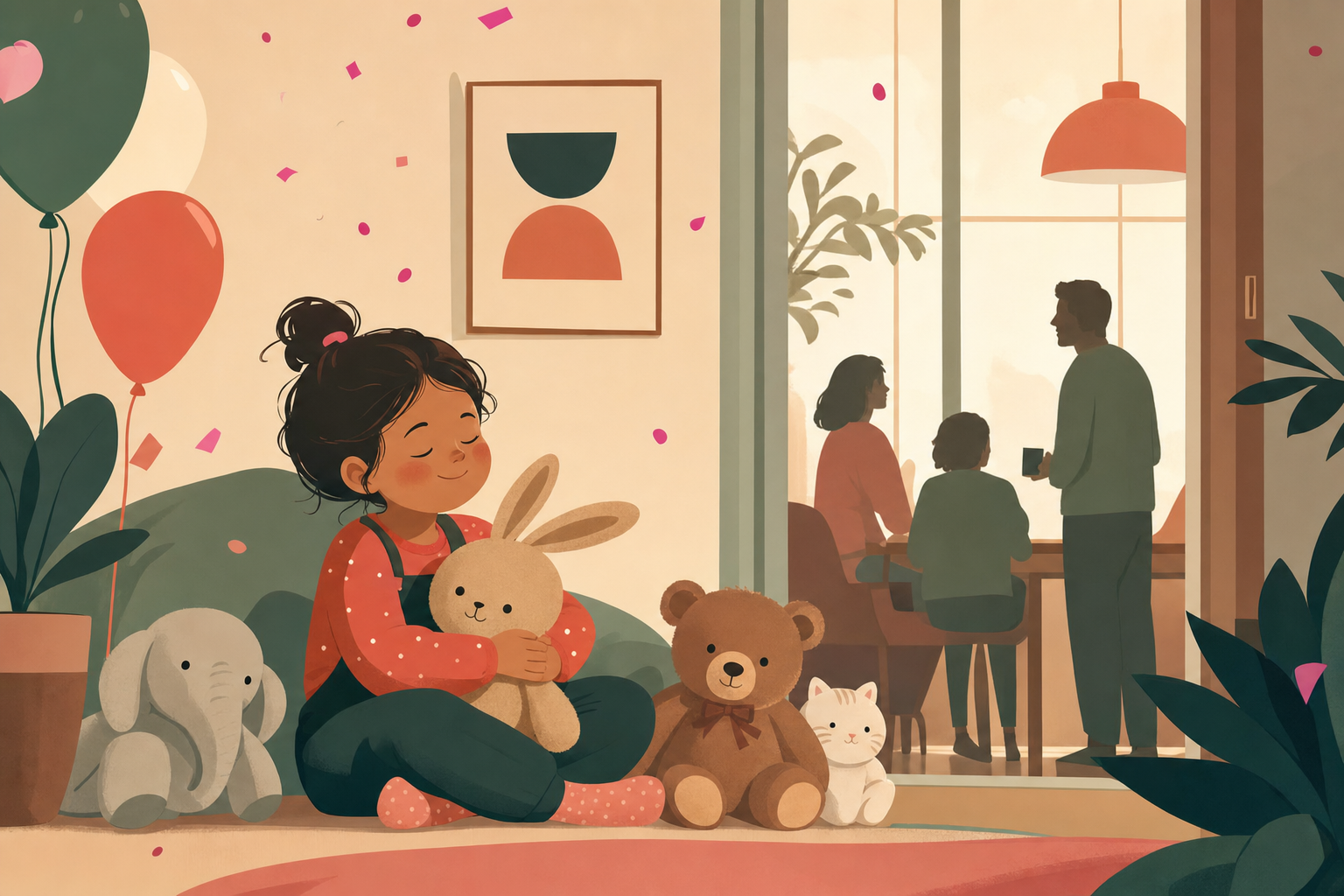
How to Plan a Low-Pressure Birthday Celebration for a 5-Year-Old Who Says They Don't Want a Party
Your five-year-old just told you they don't want a birthday party. Meanwhile, Grandma's asking when to book her flight, your partner thinks it's too big a milestone to skip, and you're stuck in the middle wondering if you should force it or cancel everything.
This isn't about convincing your child to perform for relatives. It's about finding a middle path that honors their feelings while still marking the day in a way that works for everyone, including the well-meaning family members who'd be crushed to miss it.
Why a 5-Year-Old Might Refuse a Party (And Why That's Valid)
Five-year-olds say no to parties for real reasons. Some kids find being the center of attention overwhelming. Others had a rough experience at someone else's party and worry theirs will be the same. A few just prefer one-on-one time with you over a crowd.
The trap most parents fall into is assuming resistance means shyness that needs to be overcome. Sometimes it does. More often, it's a kid who knows what they like and doesn't want to spend their birthday stressed.
Ask your child what specifically bothers them. "Too many people" needs a different solution than "I don't want to share my toys" or "The singing scares me." You can't fix the problem until you know what it actually is.
The No-Force Framework: Plan Around the Child, Not the Event
Start by separating the child's celebration from the family obligation. These don't have to be the same event on the same day.
Your child gets their birthday wish: a low-key day doing exactly what they want. Maybe that's a trip to the zoo with just you, a movie and ice cream with one best friend, or building a blanket fort at home all afternoon. Whatever it is, put it on the calendar and protect it.
The family gathering happens separately, either the weekend before or after. Frame it clearly to your child: "This is Grandma and Uncle Mike's party for you. Your actual birthday, we're doing the museum like you asked." Most kids handle this fine when they know their preference is honored first.
This approach solves the core tension. Your child doesn't feel forced. Your family doesn't feel shut out. You don't have to pick a side.
How to Design a Family Gathering That Doesn't Feel Like a Party
Call it something else. "Family birthday lunch" or "celebration dinner" signals a different vibe than "party," which carries expectations of games, performances, and being on display.
Keep the guest list tight. Immediate family only, no extras. If your child is uncomfortable with attention from ten relatives, twenty won't help. For guidance on appropriate group sizes, check out how many kids to invite to a birthday party by age, though for a family gathering you're aiming even smaller.
Skip the traditional party beats that trigger stress. No formal cake ceremony where everyone crowds around singing. Put candles on a cupcake during dessert and let your child blow them out without fanfare. No gift-opening performance in front of everyone; let them open presents later or in a quiet corner with one person at a time.
Give your child a job or escape route. Some kids do better when they have a role (helping set the table, being in charge of napkins) rather than being the passive honoree. Others need permission to leave the room when it gets overwhelming. Tell them in advance, "If you need a break, you can go play in your room and I'll come check on you."
What This Looks Like in Practice: Three Real Scenarios
Scenario 1: The Attention-Averse Kid
Saturday before the birthday: Family comes over for lunch. No decorations, no games, no singing. Grandma brings a gift that your child opens privately with her in the playroom. After lunch, adults chat while your child plays nearby (not required to entertain anyone).
Actual birthday: You and your child spend the morning at the library, then have lunch at their favorite restaurant, just the two of you.
Scenario 2: The Socially Selective Kid
Sunday after the birthday: Immediate family only for backyard dinner. Your child invites one cousin they actually like to play with during the gathering. The other adults handle themselves while the kids disappear to the swingset.
Actual birthday: Your child's best friend comes over for a movie marathon and sleepover. That's it.
Scenario 3: The Routine-Dependent Kid
For kids who struggle with change or surprises, keeping the day as normal as possible works best. Family celebration happens Friday night (a school night, but brief). Regular dinner, regular bedtime, but Grandpa's there and there's a special dessert.
Actual birthday falls on a Tuesday. School as usual, but you pick them up early for frozen yogurt, then home for themed coloring sheets from Chunky Crayon and their favorite dinner. Nothing big, nothing stressful.
If your child typically needs extra support during transitions or changes to routine, the techniques in sensory-friendly birthday party ideas for overwhelmed kids apply here too, even for a non-party gathering.
Managing Family Pushback Without Caving
Someone will have an opinion. Grandma might say you're spoiling them by giving in. Your sister might think you're making too big a deal out of normal kid resistance.
Have one clear sentence ready: "We're celebrating, just in a way that works for [child's name]." Repeat as needed. Don't justify, don't over-explain, don't debate your parenting philosophy at the dinner table.
If a relative insists on a traditional party, offer them a compromise with boundaries. "You're welcome to take [child] out for a birthday lunch, just you two, if they want to go." Most kids who refuse a party will happily have one-on-one time with a grandparent.
For family members who live far away and feel left out, a video call on the actual birthday works better than making your child perform at a gathering. They can show off a new toy, talk about their day, and hang up when they're done. No pressure, no crowd.
The Week-After Check-In: Did It Actually Work?
A few days after both events, ask your child how they felt about it. Not "Did you have fun?" which pressures them to perform gratitude. Try "What was your favorite part of your birthday?" or "If we do it the same way next year, what would you keep and what would you change?"
Some kids surprise you. The child who refused a party at five might ask for one at six, now that they've seen they get a choice. Others will request the same low-key approach every year through elementary school.
Either way, you've established something important: birthdays are about the birthday kid, not about meeting other people's expectations. That's a lesson that serves them well beyond age five.
You don't have to choose between honoring your child and keeping peace with family. You just have to separate the two events and be clear about why. One celebration for your kid on their terms, one gathering for the adults who love them. Both can happen. Neither has to be a traditional party. And your five-year-old doesn't have to smile through something that makes them miserable just because they're turning a year older.