October 26, 2026
Mixed-Age Birthday Party Plan: 90-Minute Schedule for Ages 2-10
Hosting solo with toddlers and older kids coming? Get a low-prep, one-adult 90-minute schedule with games that keep every age engaged. Grab the plan now.
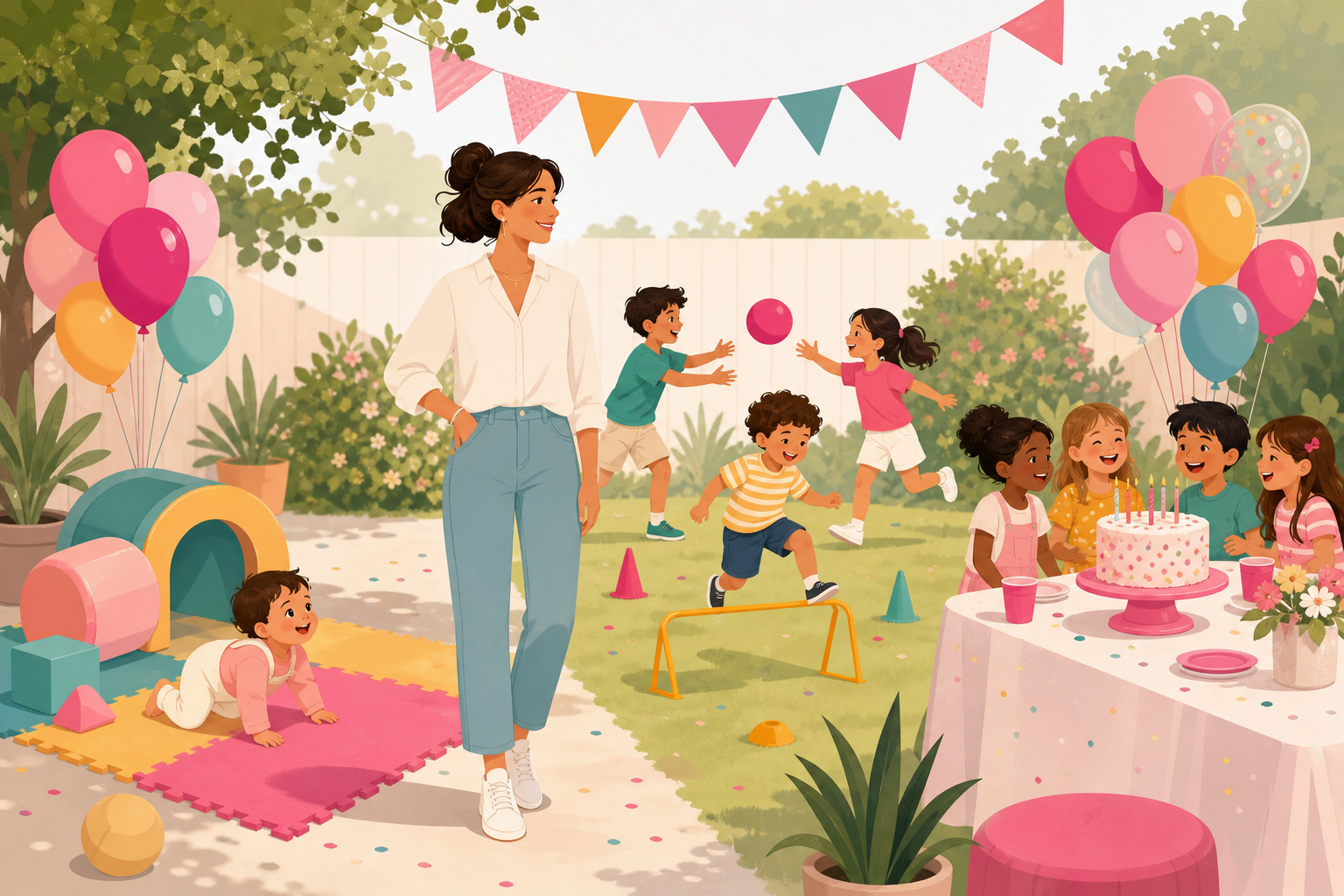
How to Plan a Mixed-Age Kids' Birthday Party at Home When Toddlers and Older Kids Are Coming: A One-Adult 90-Minute Schedule
You said yes to inviting your nephew's whole family, which means you now have a 2-year-old, a 9-year-old, and everyone in between showing up to one party, and you're hosting it alone. The game that thrills the 8-year-olds will make the toddlers cry. The toddler activity will bore the older kids in four minutes flat. This is the actual problem with a mixed-age birthday party plan for ages 2 to 10: it's not about finding "fun games," it's about managing two completely different attention spans and energy levels at the same time, with no second adult to split the group.
Here's a realistic schedule that works, plus the setup decisions that make a one-adult birthday party plan actually survivable.
Why Generic Party Game Lists Don't Work for Mixed Ages
Most advice tells you to "adapt" a scavenger hunt or relay race for different abilities. In practice, that means stopping the game every two minutes to re-explain rules, chase a toddler back to the group, or referee an 8-year-old who thinks the rules are unfair for little kids. You end up doing crowd control instead of hosting.
The fix isn't better games. It's structuring the party so toddlers and older kids are rarely doing the exact same high-energy activity at the exact same time. Instead, you run parallel tracks that intersect at a few key moments, like food and cake, where everyone can be together without a referee.
The Setup That Makes Solo Hosting Possible
Before guests arrive, set up two zones:
- A low zone (floor level, soft, contained): blankets, big blocks, a basket of toddler toys, board books. This is where toddlers default when there's no structured activity happening.
- A table zone: one table with a simple seated activity ready to go at all times, so any kid who disengages from the big group has somewhere to land.
Having the table zone pre-loaded matters more than any single game. Themed coloring sheets from Chunky Crayon make an easy party activity station because they work for a 3-year-old scribbling and a 9-year-old doing careful detail, with zero rules to explain and zero supervision required beyond handing out crayons.
If you're also planning for the chance of a schedule blowup (rain, a meltdown, cake delays), it helps to have a backup mental model ready; the same logic used for deciding whether to cancel an outdoor party for rain applies here: decide your fallback before you need it, not during it.
The 90-Minute Mixed-Age Schedule
This schedule assumes a 2-hour window total, with 90 minutes of structured time and 30 minutes of natural arrival buffer and wind-down. Times are approximate, not strict.
0 to 15 minutes: Arrival and free play
Kids trickle in at different times no matter what the invite says. Don't start anything structured yet. Toddlers go to the low zone, older kids gravitate to the table zone or outside space. Your only job here is greeting parents and pointing kids to a zone. For more on managing this chaotic opening stretch specifically, see what to do in the first 15 minutes of a kids' birthday party.
15 to 30 minutes: One all-ages activity (short and simple)
Pick something with almost no rules: bubbles, a parachute if you have one, or a simple "freeze dance" where toddlers just bounce and older kids actually follow the freeze rule. Cap it at 10 to 15 minutes. This is one of the few true mixed-age birthday party activities at home that works across ages 2 to 10, because toddlers don't need to understand the rules to enjoy it.
30 to 50 minutes: Split into parallel tracks
This is the core of the plan. Run two things at once, not back to back:
- Older kids (roughly 5 and up): a simple relay, obstacle course, or sticker/scavenger hunt with 3 to 5 easy items.
- Toddlers and younger kids: sensory bin, big cardboard box, bubbles, or free play in the low zone, ideally near a second adult or an older sibling who's opted out of the big-kid game.
You can't actively run both at once alone, so pick the track that needs more supervision (usually the older kids' game, since it involves running and rules) and let the toddler zone be self-sustaining with toys that don't need you.
50 to 65 minutes: Food and cake (the reset point)
Food is your built-in transition tool. Everyone sits, energy drops, and you get a breather. Serve food before kids get overtired or overstimulated, not after. If you notice the group getting wild around minute 45, move food up; don't wait for the clock.
65 to 80 minutes: Quiet table activity for everyone
After cake, energy should come down, not back up. This is where that pre-loaded table zone earns its keep. A seated coloring or simple craft station lets toddlers and older kids sit at the same table doing the same basic activity without anyone needing the same skill level. This window also doubles as your buffer for gift opening if you're doing it at the party.
80 to 90 minutes: Open play and goodbyes
Let structure drop away. Kids self-select back into free play while parents start trickling in for pickup. You're now just managing exits, not activities.
How to Keep Different-Age Guests Engaged Without More Adults
A few small moves do more work than any single game:
- Give older kids a "job" during toddler-heavy moments, like handing out bubbles or being a "helper" for a game. Most 7 to 10 year olds like the responsibility, and it frees you up.
- Never run a timed or elimination game with toddlers in the mix. "You're out" games cause instant meltdowns for younger kids and aren't fun for older ones either when they have to slow down for it.
- Keep the toddler zone stocked, not staffed. Toys that don't need an adult (big blocks, a box, board books) mean you're not pulled in two directions at once.
- Let the table zone run on its own for stretches. A seated activity with no winner, loser, or correct way to do it is the lowest-prep mixed-age party game format that exists, which is exactly why it shows up twice in this schedule.
If gift-giving is part of your party and you want to simplify that piece too, pairing your invite with clear no-gifts or books-welcome wording removes one more thing to manage on the day.
The Realistic Takeaway
You don't need twice the games for a mixed-age group, you need a schedule that alternates between "everyone together" and "parallel and separate," with food as your reset button. Print this schedule, tape it inside a cabinet door, and glance at it when you feel the party sliding sideways. One adult can absolutely run this, as long as the plan does some of the supervising for you.