October 17, 2026
Birthday Games Ending Early? 20-Minute Backup Plan
Birthday party games finish early? Use this 20-minute backup activity plan for ages 5 to 10 with low-prep fillers any one adult can run solo.
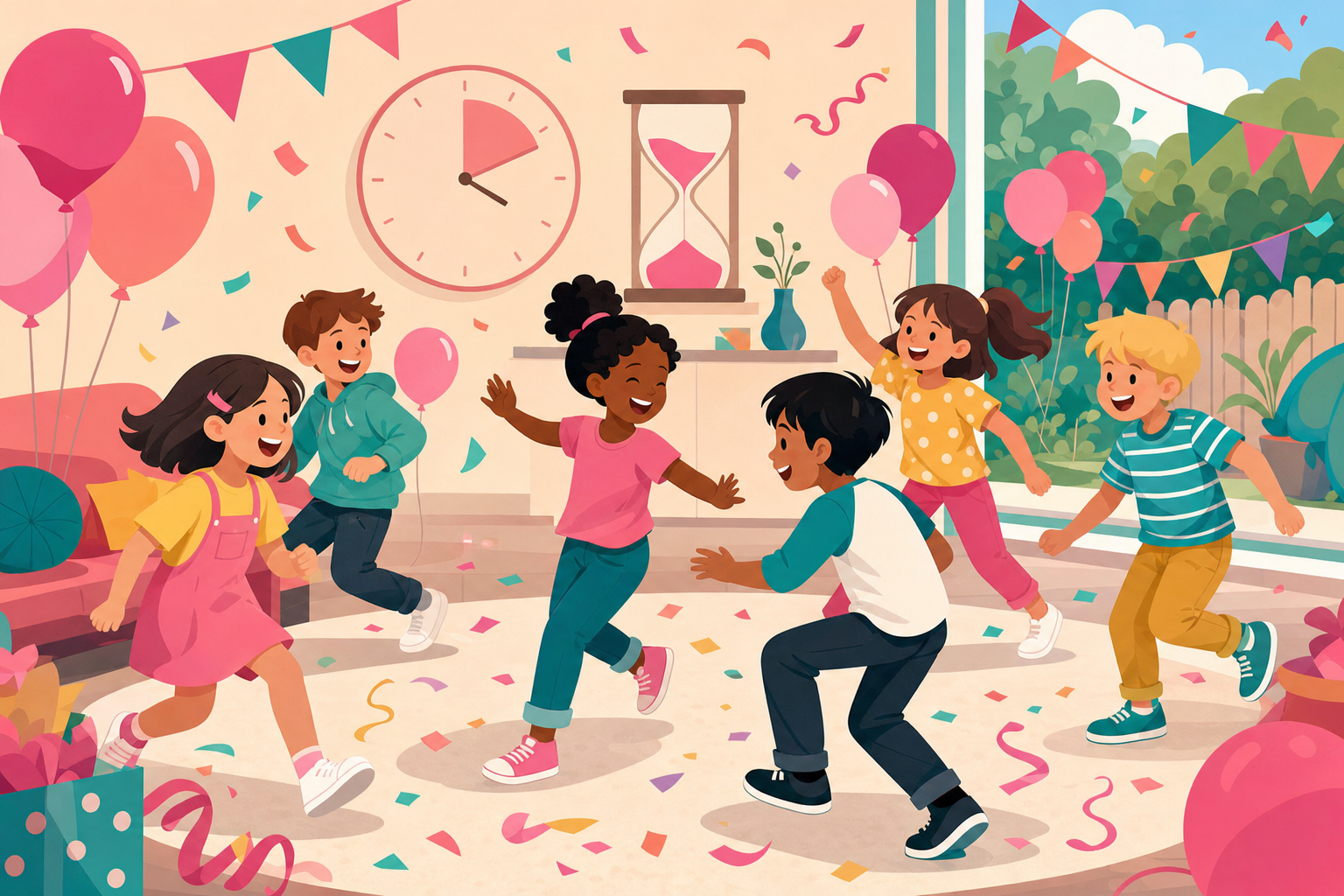
What to Do When Kids' Birthday Party Games Finish Early: A 20-Minute Backup Plan
You planned four games. They burned through all four in eighteen minutes, and now twelve kids ages 5 to 10 are standing in your living room looking at you like you're supposed to produce a rabbit from a hat. This happens at almost every party. Kids play faster than adults plan for, especially once they're excited and sugared up on juice boxes.
The fix isn't more games. It's a short, flexible buffer plan you can pull out the second things stall, without scrambling for props or rearranging the whole schedule.
Why Birthday Party Games Finish Early (And Why That's Normal)
Most party timelines are written by adults who imagine kids taking their time. Real kids do not take their time. A game of musical chairs that "should" take 15 minutes often wraps in 6. Pin the tail on the donkey goes even faster once the novelty wears off.
If you're building a birthday party timeline for ages 5 to 10, assume every activity will run 30 to 50 percent shorter than you think. That's not a planning failure, it's just how group energy works with this age range. The solution is to build in buffer activities from the start, not scramble when you notice the gap.
This is especially true if you're running the party solo. A one-adult birthday party plan has zero room for "let me go grab something from the closet." Everything you might need should already be within arm's reach before the party starts.
Build a Buffer Box Before the Party Starts
The single biggest fix for low-prep birthday party filler activities is having a box ready to go. Not a Pinterest-worthy craft station, just a shoebox with five or six items that can fill five minutes each:
- A roll of masking tape (for an impromptu floor-is-lava path or a tape line for a balance walk)
- A deck of cards for Snap or Go Fish in pairs
- A bag of balloons (balloon volleyball needs zero other equipment)
- A few scarves or socks for a quick juggling or freeze-dance prop
- A playlist already queued up on your phone
- A stack of printed coloring pages
That box is your entire answer to "what to do when birthday games end early." You don't think, you just reach in.
The 20-Minute Backup Sequence
When you notice energy dipping or a game ending faster than expected, don't ask the kids what they want to do next. Twelve kids will give you twelve answers. Instead, run this sequence in order. It moves from active to quiet, which keeps the group from spiraling into overtired chaos before cake.
Minutes 0 to 5: High-energy reset.
Something loud and physical resets the room fast. Freeze dance, balloon keep-it-up, or a 30-second dance-off works because it needs no explanation and no materials beyond a speaker.
Minutes 5 to 12: Structured but simple.
Move into something with light rules but low setup, like Simon Says, a scavenger hunt for five household objects, or a round of "would you rather." This holds attention longer than free play because there's a clear goal.
Minutes 12 to 18: Quiet transition activity.
This is the part most party plans skip. Kids need a wind-down before the next big moment (cake, presents, pickup). Hand out coloring pages or have them sit in a circle for a quick group guessing game like "20 questions." Themed coloring sheets from Chunky Crayon make an easy party activity station here, since you can match the sheet to the party theme and kids settle into them without much direction.
Minutes 18 to 20: Bridge to the next scheduled activity.
Use the last two minutes to announce what's coming next ( "okay, time to wash hands for cake!" ) so the transition feels planned, not improvised.
This sequence works because it doesn't ask one adult to manage high energy for 20 straight minutes. It borrows momentum from the first few minutes and lets it taper naturally.
Match the Filler to the Age Mix
Ages 5 to 10 is a wide range, and a filler that works for a 9-year-old will bore a 5-year-old (or the reverse). A few adjustments:
- For younger kids (5 to 6), keep instructions to one step. "Freeze when the music stops" works. "Form teams of three and pass the balloon without using your hands" does not.
- For older kids (8 to 10), add a light competitive element. A timed scavenger hunt or a trivia round about the birthday kid keeps them engaged longer than toddler-style games.
- For a mixed group, pair an older kid with a younger one for anything team-based. It gives the older kid a job (helper) instead of a reason to disengage.
If you're dealing with a guest who hangs back from group games entirely, it helps to have a low-pressure option ready. Our guide to birthday party games for shy kids has a few ideas that double nicely as quiet buffer activities, since they don't require performing in front of the group.
Keep the Buffer Plan Visible, Not Just in Your Head
Tape a small index card inside a kitchen cabinet or stick it to the fridge with the 20-minute sequence written out. When you're mid-party and your brain is fried, you don't want to be mentally reconstructing a plan. You want to glance at four lines and go.
If another adult is helping (a partner, a grandparent, an older sibling), give them the card too. Two people both working from the same simple list beats one person trying to direct while the other guesses.
This same logic applies to the start of the party, not just the gaps in the middle. If you've ever had kids arrive before you're fully set up, the approach in our birthday party arrival activities guide uses a similar idea: a short, low-prep activity ready to go so you're never caught without a plan. And if quiet independent play is something you lean on outside of parties too, the ideas in screen-free indoor activities kids play independently translate well into that quiet minutes-12-to-18 window.
The Bottom Line
Games finishing early isn't a sign you planned badly, it's just what happens when a dozen excited kids meet a tightly timed schedule. The fix is a short, pre-built buffer sequence (loud, then structured, then quiet) plus a shoebox of supplies you never have to think twice about. Tape the plan somewhere visible, match the energy to the age mix in the room, and you'll never again stand in your living room wondering what comes next.