July 3, 2026
Inclusive Birthday Party Guide for Kids with Sensory Needs
Plan a sensory-friendly birthday party for ages 4 to 8 with our printable checklists, activity ideas, and food safety tips. Make every child feel welcome.
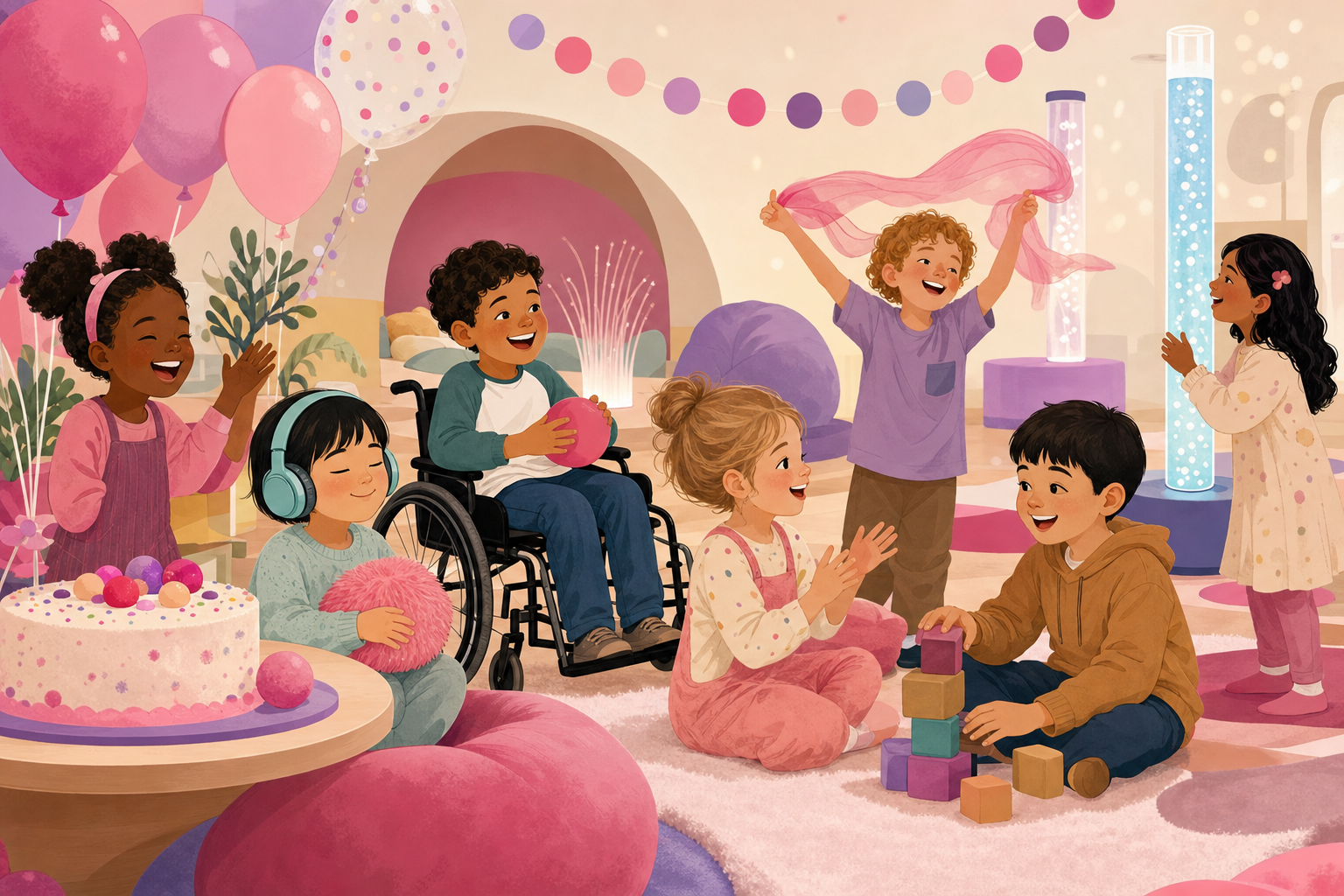
How to Plan an Inclusive Birthday Party for Kids With Sensory Needs or Disabilities
You want every child at the party to feel welcome and safe, but you're not sure how to adapt a typical birthday setup for a guest with sensory processing differences, autism, or physical disabilities. The invitations feel too vague, the activity list feels too loud, and you're worried about food allergies or accessibility gaps you haven't thought of.
This guide walks you through the entire process: scouting a sensory-friendly venue, writing clear invitations, choosing activities that work for different needs, and managing food safety without stress.
Start With a Parent Conversation (Before You Send Invites)
Before you finalize anything, reach out to the parents of kids with sensory needs or disabilities on your guest list. A quick text or call goes a long way.
Ask:
- Are there any sensory triggers we should avoid (loud music, flashing lights, strong smells)?
- Does your child need a quiet space to take breaks?
- Are there any mobility or accessibility needs for the venue?
- Any food allergies or dietary restrictions?
- Would it help to send a visual schedule of the party ahead of time?
This conversation replaces guesswork with real information. Parents will appreciate that you asked instead of assuming.
Write Invitations That Set Clear Expectations
Most party invitations leave out the details that help kids with sensory needs or anxiety prepare. A good inclusive invitation tells families exactly what to expect.
Include:
- Start and end times (not just "2 to 4 p.m." but "Drop-off at 2:00, pickup at 4:00")
- What the party space looks like ("We'll be in the fenced backyard" or "The community center has a ramp entrance and an accessible bathroom")
- Noise level and sensory environment ("Music will be playing softly in the background" or "We'll have a quiet room available if anyone needs a break")
- Activity overview ("Free play in the yard, then cake, then one group game")
- Food plan ("Pizza, fruit, and cake. Let us know about allergies by [date].")
- What to bring or not bring ("No gifts, please" or "Bring a swimsuit and towel")
This level of detail helps all parents, not just those with kids who have sensory needs. It removes the mental load of guessing.
Sample invitation wording:
You're invited to Mia's 6th birthday!
Saturday, June 10, 2:00 to 4:00 p.m.
Where: Our backyard (123 Maple Street). There's a ramp to the side gate and an accessible bathroom inside.
What to expect: Free play with bubbles and sidewalk chalk (2:00 to 2:45), then pizza and cake in the shade (2:45 to 3:15), then one optional group game (3:15 to 3:45). We'll have a quiet space inside if anyone needs a break.
Food: Cheese pizza, watermelon, and vanilla cake. Please let us know about allergies by June 5.
RSVP by June 3: [your contact]
For kids who benefit from visual schedules, consider sending a simple photo-based timeline a few days before the party. You can use visual schedules for kids as a model, adapting the format for party events instead of daily routines.
Scout Your Venue With a Sensory and Accessibility Checklist
Whether you're hosting at home, a park, or a rented space, walk through the venue with these questions:
Sensory environment:
- Can you control the noise level (turn down music, avoid echo-heavy rooms)?
- Is there natural light, or will you need harsh fluorescents?
- Are there strong smells (chlorine, cleaning products, food cooking)?
- Can you create a designated quiet zone with soft seating, dim lighting, and a few calm activities?
Physical accessibility:
- Is there step-free access to the party area?
- Are doorways and pathways wide enough for a wheelchair or walker?
- Is the bathroom accessible?
- Are tables and activity stations at a height that works for kids using mobility devices?
Safety and layout:
- Is the space enclosed or clearly bounded so kids can move freely without getting lost?
- Are there any hazards (sharp corners, loose rugs, slippery floors)?
- Can you set up a visual boundary (cones, tape, furniture) to define the play area?
If you're hosting at home and space is tight, consider a low-key birthday party format that limits the number of guests and keeps the setup simple.
Choose Sensory-Friendly Activities
The best inclusive activities offer choices, not mandatory participation. Kids can engage at their own comfort level.
Sensory-friendly activity ideas:
- Free play stations: Set up bubbles, sidewalk chalk, or a small sandbox. Kids can join or leave as they like.
- Quiet coloring corner: Themed coloring sheets from Chunky Crayon make an easy low-pressure station for kids who need to step back.
- Sensory bins: Fill shallow bins with rice, beans, or water beads. Add scoops and small toys.
- Movement activities with clear instructions: Simon Says, Red Light Green Light, or a simple obstacle course. Keep rules visual (hold up a red card for "stop").
- Craft with a model: Show a finished example so kids know what the end result should look like. Avoid open-ended crafts that create confusion.
What to skip or modify:
- Loud music or sudden noises (use a playlist at low volume instead of a speaker at full blast)
- Competitive games that single out losers (everyone gets a small prize or sticker)
- Activities that require waiting in long lines (set up multiple stations so kids can rotate)
- Surprises like a costumed character bursting through the door (warn families ahead of time if you're hiring entertainment)
If you're planning DIY party activities without an entertainer, focus on parallel play options rather than group games that require everyone to participate at once.
Manage Food Allergies and Dietary Restrictions
Food safety is non-negotiable. One mistake can send a child to the hospital.
Before the party:
- Collect allergy information from every family when they RSVP.
- Choose simple, common foods with short ingredient lists (plain pizza, fresh fruit, plain cake).
- If a child has a severe allergy (peanuts, tree nuts, dairy), make the entire party free of that allergen. Don't rely on separate tables.
- Label every food item with ingredients. Use index cards or small signs.
At the party:
- Serve food yourself instead of letting kids grab from a communal table. This prevents cross-contamination.
- Wash hands before eating (keep wipes or a handwashing station nearby).
- Have a separate sealed snack for any child with multiple allergies. Check with their parent first.
- If you're unsure about a food, don't serve it. It's better to have fewer options than to risk an allergic reaction.
Safe default menu:
- Plain cheese pizza (check the crust for dairy-free or gluten-free needs)
- Fresh fruit (whole or pre-cut, labeled)
- Plain vanilla or chocolate cake (or cupcakes from a dedicated allergy-friendly bakery)
- Water and juice boxes (check labels for allergens in flavorings)
If you're working with a tight budget, check out cheap kids party ideas that look expensive for ways to keep food costs low without sacrificing safety or quality.
Set Up a Quiet Break Space
Even the most sensory-friendly party can become overwhelming. A quiet break space gives kids a place to reset without leaving the party entirely.
What to include:
- A small tent, canopy, or sectioned-off corner away from the main activity area
- Soft seating (bean bags, cushions, a blanket)
- Dim lighting (turn off overhead lights or use a small lamp)
- A few calm activities (board books, a fidget toy, a simple puzzle)
- Noise-canceling headphones if you have them
How to introduce it:
- Show kids the quiet space when they arrive ("If you need a break, you can sit here anytime")
- Don't make it feel like a punishment or a time-out
- Let kids use it as needed without asking permission
Some kids will never use it. Others will spend half the party there. Both are fine.
What to Do on Party Day
You've planned everything. Now it's about staying flexible and watching for cues.
Arrival:
- Greet each child and family at the entrance. Give a quick tour of the space, pointing out the bathroom, quiet area, and food table.
- Let kids arrive and settle in before starting any group activities. Some kids need 10 minutes to adjust.
During the party:
- Stick to your schedule but don't force participation. If a child wants to skip the group game, let them.
- Watch for signs of overwhelm (covering ears, withdrawing, stimming more than usual). Gently suggest the quiet space or a break outside.
- Keep background noise low. If you're playing music, choose instrumental tracks without sudden volume changes.
Goodbyes:
- Give a 10-minute and a 5-minute warning before pickup time. This helps kids with transitions.
- Have a small thank-you item ready at the door (a sticker, a piece of candy, a small toy). Skip elaborate goody bags that create decision fatigue.
If you're dealing with sensory-friendly birthday party ideas for overwhelmed kids, you'll find more strategies for calming an overstimulated group mid-party.
Printable Checklist: Inclusive Party Planning
Use this checklist to track your planning:
4 weeks before:
- [ ] Reach out to families to ask about sensory needs, allergies, and accessibility
- [ ] Choose and scout venue with sensory and accessibility checklist
- [ ] Decide on date, time, and guest list
2 weeks before:
- [ ] Send detailed invitations with sensory and schedule information
- [ ] Plan activities (include quiet options and break space)
- [ ] Confirm food menu and allergy accommodations
1 week before:
- [ ] Send visual schedule to families who requested it
- [ ] Shop for food, supplies, and decorations
- [ ] Set up quiet break space
Party day:
- [ ] Label all food with ingredients
- [ ] Greet families and give a quick tour
- [ ] Monitor noise levels and offer breaks as needed
- [ ] Give transition warnings before pickup
You don't need to be a therapist or an accessibility expert to throw an inclusive party. You just need to ask questions, share details, and create space for kids to participate in their own way. That's enough.